
1. Introduction
If you are looking for a simple and effective way 7 Proven Ways to Clean Sofa Cushions Properly this guide will help you do it step by step at home. Sofa cushions collect dust, stains, odours, and bacteria over time, especially with daily use. Without proper cleaning, they can quickly look dull and become unhygienic.
In this blog post, you’ll learn easy and practical methods to clean different types of sofa cushions, remove tough stains, eliminate bad smells, and keep your sofa looking fresh for longer. Whether your cushions are fabric, foam, or removable covers, these tips will help you clean them safely and effectively.
Table of Contents
2. Why Cleaning Sofa Cushions Properly Matters
Understanding 7 Proven Ways to Clean Sofa Cushions Properly is not just about keeping your furniture looking appealing—it plays a major role in maintaining a clean, healthy, and comfortable home. Sofa cushions are used daily, which means they easily collect dust, sweat, food crumbs, pet hair, and even bacteria over time.
One of the biggest reasons to focus on 7 Proven Ways to clean sofa cushions properly is health. Dirty cushions can trap allergens like dust mites and pollen, which may trigger allergies or breathing issues. Regular and proper cleaning helps remove these hidden irritants, improving the overall air quality inside your home.
Another important benefit is extending the life of your sofa. When dirt and grime build up inside the fabric or foam, they slowly break down the material. By learning 7 Proven Ways to clean sofa cushions properly, you can protect the fabric, maintain the cushion’s shape, and avoid early wear and tear—saving you money in the long run.
Clean cushions also make your living space more inviting. Unpleasant odours from spills, pets, or daily use can settle deep inside the cushions. Proper cleaning removes these smells and keeps your sofa fresh, which is especially important if you have guests visiting your home.
In short, knowing 7 Proven Ways to clean sofa cushions properly ensures better hygiene, longer-lasting furniture, and a fresher, more comfortable living environment. It’s a simple habit that delivers long-term benefits.
3. Identify Your Sofa Cushion Type (Before You Start)
Before you begin 7 Proven Ways to Clean Sofa Cushions Properly, it’s important to understand what type of cushions you’re dealing with. Using the wrong cleaning method can damage the fabric, fade colours, or even ruin the cushion filling. A quick check now can save you time, effort, and money later.
1. Fabric Sofa Cushions
Fabric cushions are the most common and come in materials like cotton, polyester, linen, or microfibre. These tend to absorb dust, spills, and odours easily, which means they require regular cleaning. Most fabric cushions can be cleaned using mild detergents or natural solutions, but always check the cleaning code before applying any liquid.
2. Leather Sofa Cushions
Leather cushions need a completely different approach. They don’t absorb stains like fabric, but they are sensitive to moisture and harsh chemicals. When following 7 Proven Waysto Clean Sofa Cushions Properly, leather should be cleaned with a damp cloth and a gentle leather cleaner to prevent cracking or discolouration.
3. Foam Cushions (Inner Filling)
The inside of your cushions is usually made of foam. While it’s not always visible, it can trap dust, moisture, and odours over time. Foam should never be soaked in water. Instead, light cleaning and proper drying are essential to maintain its shape and prevent mould.
4. Removable vs Non-Removable Covers
- Removable covers are easier to clean and sometimes machine washable.
- Non-removable covers require surface cleaning and extra care to avoid over-wetting the cushion.
Knowing this difference is key when applying the correct cleaning method.
5. Check the Cleaning Code Label
Most sofas come with a tag that provides cleaning instructions. Look for these common codes:
- W – Water-based cleaning is safe
- S – Use solvent-based cleaners only
- WS – Both water and solvent cleaners are safe
- X – Vacuum only, no liquids
Understanding these codes is essential if you want to follow 7 Proven Ways to Clean Sofa Cushions Properly without causing damage.
Taking a few minutes to identify your sofa cushion type ensures that you choose the safest and most effective cleaning method. This simple step makes the entire cleaning process easier and helps keep your sofa looking fresh for years.
4. Essential Materials You Need at Home
Before you start the process of 7 Proven Ways to clean sofa cushions properly, it’s important to gather the right cleaning materials. Using the correct tools not only makes the job easier but also helps prevent damage to your sofa fabric. The good news is that most of these items are already available at home.
A vacuum cleaner with a brush attachment is one of the most essential tools. It helps remove dust, crumbs, pet hair, and other loose particles from the surface and deep inside the cushions. Regular vacuuming is the first step toward keeping your sofa clean and fresh.
You should also have a gentle cleaning solution or a fabric-safe upholstery cleaner on hand. Choose a gentle cleaning solution that is safe for your sofa material. Harsh chemicals can fade colours or weaken the fabric, so always go for a mild option when learning how to clean sofa cushions properly.
White vinegar is another powerful and natural cleaning ingredient. It works well for breaking down stains, killing bacteria, and removing unpleasant odours. When mixed with water, it becomes a safe and effective solution for most fabric cushions.
Baking soda is perfect for deodorising. If your sofa cushions have absorbed smells over time, sprinkling baking soda and letting it sit before vacuuming can help eliminate odours naturally. It’s a simple but highly effective trick.
Keep a few microfibre cloths on hand as well. These are soft, absorbent, and gentle on fabric, making them ideal for wiping, blotting stains, and applying cleaning solutions without causing damage.
A soft brush can be useful for lightly scrubbing stubborn spots. It helps lift dirt from the fabric without being too rough. Always use gentle pressure to avoid harming the material.
You should also have a spray bottle for applying cleaning solutions evenly. This allows better control and prevents over-wetting the cushions, which is important for proper drying.
Lastly, warm water is needed to mix with cleaning agents and rinse surfaces. It helps activate cleaning solutions and makes stain removal more effective.
Having these simple materials ready will make the entire process of How to Clean Sofa Cushions Properly smoother, safer, and more efficient.
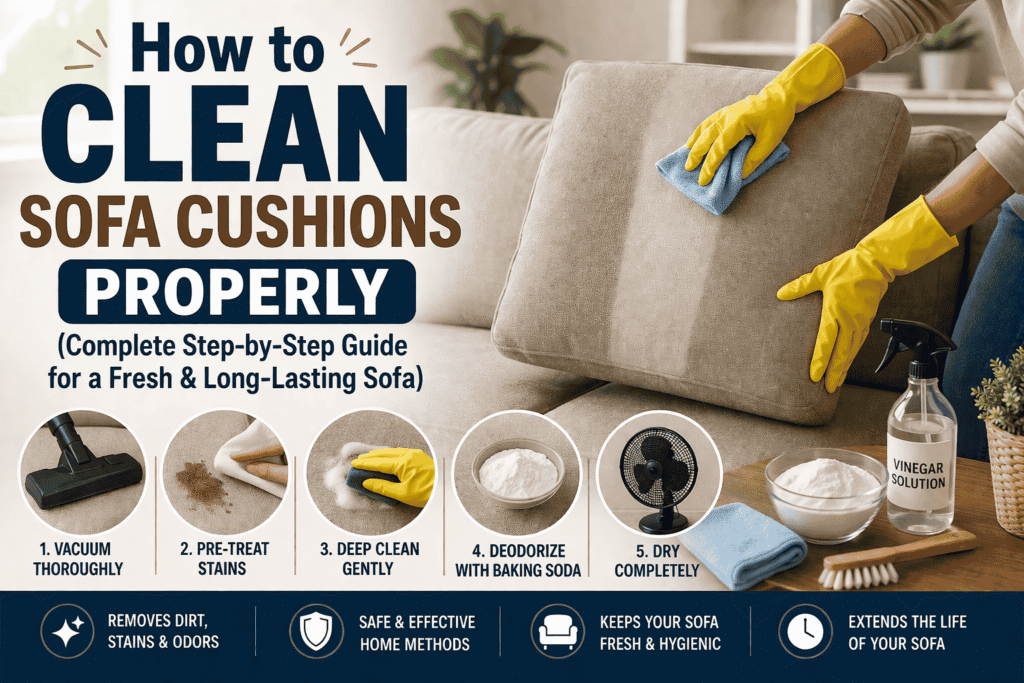
5. Step-by-Step Guide: How to Clean Sofa Cushions Properly
Cleaning your sofa cushions the right way doesn’t have to be complicated. By following a clear process, you can remove dirt, eliminate odours, and keep your cushions looking fresh for longer. Below is a simple, effective method that shows how to clean sofa cushions properly at home.
Step 1: Remove Cushions and Loose Dirt
Start by taking all the cushions off the sofa. This makes it easier to clean every side properly.
- Shake the cushions gently to remove loose dust and crumbs.
- Clean the surface using a vacuum fitted with a soft brush head to lift dust and debris effectively.
- Pay special attention to seams, corners, and hidden areas.
This step is important because removing surface dirt prevents it from spreading deeper during cleaning.
Step 2: Check the Cleaning Label & Do a Spot Test
Before applying any cleaning solution, always check the manufacturer’s label. Most sofas have cleaning codes like the following:
- W (water-based cleaner)
- S (solvent-based cleaner)
- WS (both are safe)
- X (vacuum only)
After that, do a quick patch test:
- Apply a small amount of cleaner to a hidden area
- Wait a few minutes to check for colour fading or damage
This ensures you avoid ruining the fabric while learning how to clean sofa cushions properly.
Step 3: Treat Stains First
If your cushions have visible stains, deal with them before deep cleaning.
- Food & drink stains: Use mild detergent mixed with warm water
- Oil or grease stains: Sprinkle baking soda, let it sit, and then vacuum
- Pet stains: Use a mix of vinegar and water to neutralise odour
- Ink stains: Dab gently with rubbing alcohol (avoid scrubbing).
Gently dab the stain rather than scrubbing it, as rubbing can push it deeper and make it spread.
Step 4: Deep Clean the Cushions
Now it’s time for a thorough clean based on your cushion type.
For fabric cushions:
- Combine lukewarm water with a gentle cleaning solution in a small quantity.
- Lightly dampen a cloth and wipe the surface.
- Use a soft brush for deeper dirt
For foam cushions:
- Avoid soaking them completely
- Wipe the surface with a slightly moistened cloth along with a gentle soap solution.
- Gently press to remove excess moisture
For leather cushions:
- Use a leather-safe cleaner or a mild soap solution
- Wipe with a soft cloth and dry immediately.
This step is the core of how to clean sofa cushions properly, so be gentle and avoid over-wetting.
Step 5: Deodorise the Cushions Naturally
Even if your cushions look clean, odours can still remain.
- Sprinkle baking soda evenly over the cushions.
- Let it sit for 20–30 minutes
- Vacuum thoroughly
Baking soda helps absorb unwanted smells and leaves your sofa feeling fresh.
Step 6: Dry the Cushions Completely
Proper drying is just as important as cleaning.
- Let cushions air-dry in a well-ventilated area
- Place them near sunlight, but avoid harsh direct exposure for delicate fabrics.
- Do not use cushions until they are fully dry.
Damp cushions can lead to mould and bad odours, which defeats the purpose of learning how to clean sofa cushions properly.
Final Tip
Consistency is key. Regular light cleaning combined with occasional deep cleaning will keep your sofa cushions in excellent condition for years.
6. How to Clean Non-Removable Sofa Cushions
When learning how to clean sofa cushions properly, non-removable cushions can feel tricky because you cannot take off the covers and wash them separately. However, with the right technique, you can still clean them deeply, remove stains, and refresh the fabric without damaging the cushion filling.
The key is to use minimal moisture, gentle products, and careful application so the foam inside stays safe and dry.
1. Remove Loose Dirt First
Start with dry cleaning before using any liquid.
- Use a vacuum cleaner with a soft brush attachment
- Clean every surface, including edges and stitching lines
- Remove dust, crumbs, hair, and surface debris
This step is important because it prevents dirt from spreading when you start wet cleaning.
2. Always Do a Patch Test
Always check the cleaning solution on a small hidden area first before using it on the whole surface.
- Pick a hidden area of the cushion
- Apply a small amount of cleaner
- Wait a few minutes and check for any colour change or fabric damage
This helps ensure your method is safe for the sofa material.
3. Clean Stains Carefully
Different stains need different treatments when you are focusing on how to clean sofa cushions properly.
Simple stain solutions:
- Food or drink stains: Mild soap mixed with water
- Greasy marks: Baking soda (leave it for absorption, then vacuum)
- Pet stains: Diluted white vinegar solution
- Ink spots: Light dabbing with rubbing alcohol
Use a soft cloth and gently blot the stain. Avoid scrubbing, as it can damage the fabric and push the stain deeper.
4. Use a Light Cleaning Mix
For general cleaning of non-removable cushions:
Safe DIY solution:
- Warm water
- A few drops of gentle liquid soap
- Optional: a small amount of white vinegar
How to use it:
- Dip a clean cloth into the mixture.
- Wring it out until it is just damp
- Wipe the surface in small sections.
Do not soak the fabric, as too much moisture can stay inside the cushion and cause odour or mould.
5. Refresh Deep Dirt with Foam Cleaner
If cushions are heavily used:
- Use upholstery foam cleaner
- Spray lightly over the surface
- Let it sit for a short time.
- Wipe it off with a dry cloth
This helps lift deep dirt without wetting the cushion too much.
6. Remove Odours Naturally
Non-removable cushions often trap smells from daily use.
- Sprinkle baking soda evenly over the cushion
- Leave it for 30–60 minutes
- Vacuum it thoroughly afterward.
This is one of the simplest and most effective steps in how to clean sofa cushions properly at home.
7. Dry the Cushions the Right Way
Proper drying is essential to avoid damage.
- Keep cushions in a well-ventilated space.
- Allow air circulation around them
- Use a fan to speed up drying if needed
- Avoid heavy direct sunlight for long periods
Make sure the cushions are fully dry before using them again.
Final Note
Non-removable sofa cushions require gentle handling, but they can still be cleaned effectively with simple home methods. If you clean them regularly and treat stains quickly, your sofa will stay fresh, clean, and comfortable for a long time without needing professional cleaning services.
7. Common Mistakes to Avoid
When learning how to clean sofa cushions properly, many people unintentionally make small mistakes that can damage the fabric, reduce cushion life, or leave behind stains and bad odours. Avoiding these errors is just as important as using the right cleaning method.
Below are the most common mistakes you should always watch out for:
1. Using Too Much Water
One of the biggest mistakes is soaking sofa cushions with water. While it may seem like deeper cleaning, excess moisture can seep into the foam and cause mould, mildew, and unpleasant smells.
Better approach:
Use a damp cloth or light spray instead of soaking the fabric.
2. Skipping the Spot Test
Many people directly apply cleaning solutions without testing them first. This can lead to discolouration or fabric damage.
Better approach:
Always test any cleaner on a hidden area before using it on the full cushion.
3. Using Harsh Chemicals
Strong detergents, bleach, or abrasive cleaners can weaken fabric fibres and fade colours. This is especially risky when trying to clean delicate sofa materials.
Better approach:
Stick to mild detergent, vinegar solutions, or fabric-safe cleaners.
4. Not Checking Fabric Care Labels
Every sofa cushion has different cleaning requirements. Ignoring care labels is a common mistake that can lead to permanent damage.
Better approach:
Before you start cleaning, check for codes like W, S, WS, or X to understand the correct cleaning method.
5. Rubbing Stains Too Hard
Scrubbing aggressively may seem effective, but it often pushes stains deeper into the fabric and damages the texture.
Better approach:
Gently blot stains using a microfibre cloth instead of rubbing.
6. Not Drying Cushions Properly
Improper drying is one of the main reasons cushions develop a bad smell after cleaning. Leaving them damp for too long can also lead to mould growth.
Better approach:
Let cushions air dry completely in a well-ventilated area before placing them back on the sofa.
7. Ignoring Regular Maintenance
Waiting too long between cleanings allows dust, stains, and allergens to build up, making it harder to maintain hygiene.
Better approach:
Regularly vacuum and follow a cleaning schedule to keep sofa cushions fresh.
Final Tip
If you want to master how to clean sofa cushions properly, the key is not just cleaning but cleaning carefully. Avoiding these common mistakes will help you keep your sofa fresh, hygienic, and long-lasting without unnecessary damage.
8. Natural vs Chemical Cleaning Methods
When learning how to clean sofa cushions properly, one of the most important decisions is choosing between natural cleaning methods and chemical cleaning products. Both options can be effective, but they work in different ways and are suitable for different types of stains, fabrics, and cleaning needs.
Understanding the difference helps you clean your sofa safely without damaging the fabric or leaving behind harmful residues.
Natural Cleaning Methods
Natural cleaning methods use simple, non-toxic ingredients commonly found at home. These are often preferred for regular maintenance and light to moderate cleaning.
Common Natural Cleaners
- Baking soda (for odour removal)
- White vinegar (for stain and bacteria removal)
- Lemon juice (natural deodoriser)
- Mild dish soap mixed with water
Benefits of Natural Cleaning
- Safe for most fabric types
- Eco-friendly and chemical-free
- Budget-friendly and easily available
- Ideal for households with kids and pets
- Reduces risk of fabric damage or discolouration
Best Use Cases
- Light stains (dust, food crumbs, light spills)
- Odour removal from cushions
- Regular maintenance cleaning
- Sensitive fabric sofas
Natural methods are a great first step in how to clean sofa cushions properly, especially if you prefer a gentle and safe approach.
Chemical Cleaning Methods
Chemical cleaning methods use commercial upholstery cleaners or stronger cleaning agents designed to remove tough stains and deep dirt.
Common Chemical Cleaners
- Upholstery foam cleaners
- Fabric stain removers
- Enzyme-based pet stain cleaners
- Disinfectant sprays
Benefits of Chemical Cleaning
- Stronger stain removal power
- Works faster on deep-set stains
- Effective for grease, ink, and pet accidents
- Often designed for specific fabric types
Best Use Cases
- Old or stubborn stains
- Heavy grease or oil marks
- Deep cleaning after long periods
- Professional-level cleaning results
Chemical methods are useful when natural solutions are not strong enough for proper sofa cushion cleaning.
Natural vs. Chemical: Which One is Better?
There is no single answer when it comes to how to clean sofa cushions properly, because both methods have their place.
- Choose natural cleaning for safe, routine maintenance and light stains
- Choose chemical cleaning for deep stains and heavy dirt build-up
A balanced approach works best: start with natural methods and only switch to chemical cleaners when necessary.
Final Tip
No matter which method you choose, always test on a small hidden area first. This ensures your sofa fabric remains safe and prevents unwanted damage or discolouration.
By understanding both options, you can clean smarter, protect your cushions, and maintain a fresh and long-lasting sofa.
9. How Often Should You Clean Sofa Cushions?
Understanding how often to clean sofa cushions properly is just as important as knowing the cleaning method itself. Regular cleaning keeps your sofa fresh, hygienic, and long-lasting while preventing deep stains and bad odours from building up over time.
For basic maintenance, you should vacuum your sofa cushions once a week. This helps remove dust, crumbs, pet hair, and surface dirt before they settle deep into the fabric. It’s a simple habit that makes a big difference in keeping your cushions clean.
For a more thorough clean, aim to clean sofa cushions properly once every 1–2 months. This includes spot cleaning stains, deodorising with natural solutions like baking soda, and lightly refreshing the fabric. Regular deep cleaning prevents stubborn stains from becoming permanent and keeps your sofa looking new.
If you have pets, children, or heavy daily use, you may need to clean your cushions more often—around every 2–4 weeks for deep cleaning. High-traffic sofas naturally collect more dirt, sweat, and spills.
Seasonal deep cleaning (every 3–4 months) is also highly recommended. This is when you fully refresh your sofa, remove hidden dirt, and restore its original freshness.
In short, the best approach is consistency. When you follow a proper routine for how to clean sofa cushions properly, you not only improve hygiene but also extend the life and comfort of your sofa.
10. Tips to Keep Sofa Cushions Clean Longer
Keeping your sofa fresh doesn’t end with cleaning—it starts with prevention. If you want to reduce how often you need deep cleaning, these practical habits will help you maintain clean and fresh cushions for much longer. These tips are especially useful if you want to master how to clean sofa cushions properly and keep them in good condition every day.
1. Use Washable Cushion Covers
One of the easiest ways to protect your sofa cushions is by using removable and washable covers. These act as a barrier against dust, sweat, and spills. Wash them regularly to prevent dirt from reaching the inner cushions.
2. Avoid Eating on the Sofa
Food crumbs and drink spills are the biggest reasons cushions get stained quickly. Try to keep eating areas separate from your sofa. If you must eat there, use a tray and clean up immediately after.
3. Vacuum Weekly
Regular vacuuming is essential if you want to understand how to clean sofa cushions properly and maintain them long-term. Vacuuming once a week removes dust, pet hair, and hidden dirt before it builds up.
4. Rotate and Flip Cushions
To prevent uneven wear and dirt buildup, rotate and flip your cushions every week or two. This helps distribute pressure evenly and keeps one side from getting dirty or flattened faster than the other.
5. Clean Spills Immediately
The faster you act, the easier it is to prevent permanent stains. Blot spills immediately with a clean cloth—never rub, as it can push the stain deeper into the fabric.
6. Keep Pets Off (or Use Covers)
If you have pets, their fur and oils can quickly dirty your sofa cushions. Either train them to stay off the sofa or use pet-friendly covers that can be washed frequently.
7. Use Baking Soda for Freshness
Sprinkle baking soda lightly on cushions once a month. It helps absorb odours and keeps your sofa smelling fresh. Vacuum it off after 20–30 minutes.
8. Maintain Good Airflow in the Room
Proper ventilation reduces moisture buildup, which can cause odours and mould. Open windows regularly or use a fan to keep the room dry and fresh.
9. Avoid Harsh Use of Chemicals
Using strong cleaners too often can damage fabric fibres. Stick to mild solutions unless a deep stain requires stronger treatment.
10. Schedule Regular Deep Cleaning
Even with good care, cushions still need deep cleaning every few months. This supports your routine for how to clean sofa cushions properly and keeps your sofa looking new for longer.
11. When to Call Professional Sofa Cleaning Services
Even if you know how to clean sofa cushions properly, there are situations where DIY cleaning is not enough. Professional sofa cleaning services become necessary when stains, odours, or fabric damage go beyond basic home treatment.
One clear sign to call experts is deep-set or old stains that do not respond to regular cleaning methods. Coffee, ink, wine, or oil stains can penetrate deep into the fabric, making them difficult to remove without professional equipment.
You should also consider professionals if your sofa cushions have a strong, persistent bad smell caused by pets, mould, or moisture. These odours often settle deep inside the foam, where home cleaning cannot fully reach.
Delicate fabrics like silk blends, velvet, or high-end upholstery also require expert care. If you are unsure about how to clean sofa cushions properly without damaging the material, it is safer to let professionals handle it.
Another important situation is allergy concerns. If someone in your home suffers from dust allergies or asthma, professional deep cleaning can remove dust mites, bacteria, and allergens more effectively than regular vacuuming.
Finally, if your sofa hasn’t been deep cleaned for over a year or looks dull and worn despite regular care, it’s time to book a professional service.
In short, while learning how to clean sofa cushions properly helps with everyday maintenance, professional cleaning ensures a deeper, safer, and longer-lasting refresh for your sofa.
12. Conclusion (Call to Action)
Keeping your sofa fresh and clean is not difficult once you understand how to clean sofa cushions properly and follow the right steps regularly. From identifying fabric types to treating stains, deodorising, and drying correctly, every step plays an important role in maintaining a healthy and long-lasting sofa.
The key is consistency—light weekly cleaning combined with periodic deep cleaning can prevent dirt, odours, and bacteria from building up. This not only improves the appearance of your sofa but also creates a healthier living environment for your family.
However, when stains become stubborn or fabrics require extra care, don’t hesitate to seek expert help or refer to trusted cleaning resources. For additional professional home cleaning tips, you can also explore guides from reputable sources like Good Housekeeping: https://www.goodhousekeeping.com/
By applying the methods shared in this guide, you can confidently maintain your sofa and keep it looking fresh, comfortable, and inviting for years to come.
13. FAQs (For Featured Snippets & SEO Boost)
How do you clean sofa cushions without removing covers?
You can clean sofa cushions without removing covers by vacuuming them first, then using a mild soap solution or upholstery cleaner. Lightly spray the surface, gently scrub with a soft brush or microfiber cloth, and wipe away excess moisture. Always let the cushions air dry completely to prevent mold or odor buildup.
Can you wash sofa cushions in a washing machine?
Some sofa cushion covers can be machine washed, but only if the care label allows it. Use a gentle cycle with cold water and mild detergent. However, foam inserts should never be put in a washing machine as they can lose shape and get damaged.
What is the best homemade cleaner for sofa cushions?
A simple and effective homemade cleaner is a mix of warm water, a few drops of mild dish soap, and a small amount of white vinegar. This solution helps remove stains, kill bacteria, and refresh fabric without harsh chemicals.
How long does it take for cushions to dry?
Drying time depends on fabric type and weather conditions, but most sofa cushions take between 6 to 24 hours to fully dry. To speed up the process, place them in a well-ventilated area with good airflow or near indirect sunlight.
Can baking soda damage sofa fabric?
No, baking soda does not damage sofa fabric when used correctly. It is a safe and natural deodorizer that helps remove odors and absorb moisture. However, it should always be vacuumed off thoroughly after a few hours to avoid residue buildup.