
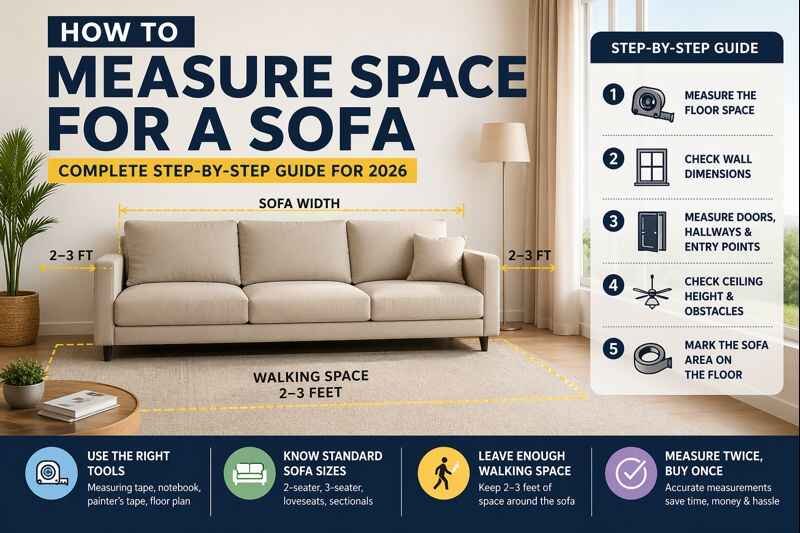
1. Introduction
How to measure space for a sofa is one of the most important steps you should take before buying new furniture. A sofa might look perfect in a showroom or online, but without proper measurements, it can end up being too big, too small, or difficult to fit through your door.
In this complete 2026 step-by-step guide, you’ll learn exactly how to measure your room, plan sofa placement, and avoid common mistakes that lead to poor fitting and wasted money. Whether you have a small apartment or a large living room, this guide will help you choose a sofa that fits perfectly and makes your space more comfortable and stylish.
Table of Contents
2. Why Measuring Space for a Sofa Is Important
Understanding how to measure space for a sofa is one of the most important steps before buying any furniture. Skipping this step often leads to expensive mistakes, delivery problems, and a living room that feels uncomfortable or overcrowded.
First, accurate measurements help you avoid buying the wrong sofa size. A sofa that looks perfect in a showroom or online can feel completely different once placed in your home. Without proper measurements, you risk choosing a piece that is too large for your space or too small to meet your needs.
Another key reason why measuring space for a sofa matters is to ensure smooth room flow and functionality. Your living room should feel open and easy to move around in. If the sofa blocks walkways, doors, or windows, it can make the entire space feel cramped and inconvenient. Proper measuring allows you to maintain comfortable walking space and a balanced layout.
Measuring also helps you plan the overall furniture arrangement. A sofa is usually the main focal point of a living room, so its size and placement affect everything else—coffee tables, TV units, chairs, and décor. When you know your exact space, it becomes much easier to create a well-organised and visually appealing setup.
Another common issue people face is delivery and entry problems. Many sofas fail to fit through doors, hallways, or staircases—not because they are too big for the room, but because they were not measured properly during planning. Learning how to measure space for a sofa ensures that your new furniture can be moved into your home without damage or hassle.
Finally, proper measurement helps you save time and money. Returns, replacements, or modifications can be costly and stressful. By taking a few minutes to measure correctly, you can confidently choose the right sofa the first time.
In short, knowing how to measure space for a sofa is not just about numbers—it’s about creating a comfortable, functional, and well-designed living space without unnecessary problems.
3. Tools You Need to Measure Sofa Space
Before you start learning how to measure space for a sofa, it’s important to have the right tools. Using simple, easily available items can make the process faster, more accurate, and stress-free.
A measuring tape is the single most important tool you’ll need for accurate measurements. A standard tape measure allows you to accurately check the length, width, and height of your room, as well as doorways and hallways. For best results, use a tape that is at least 5–8 metres long so you can measure larger spaces without difficulty.
Next, keep a notebook and pen or your smartphone handy to record measurements. It’s easy to forget numbers while moving around the room, so writing everything down ensures you don’t make mistakes when choosing your sofa.
Another helpful tool is masking tape. You can use it to outline the sofa’s dimensions directly on your floor. This gives you a clear visual idea of how much space the sofa will take and whether it fits comfortably in your room.
A measuring app or digital tool can also be useful if you prefer a more modern approach. Many smartphone apps allow you to measure spaces quickly and even create simple floor plans.
Additionally, having a floor plan or rough sketch of your room can make a big difference. You don’t need anything complicated—just a simple drawing that shows walls, windows, doors, and existing furniture. This helps you better understand how your sofa will fit into the overall layout.
If possible, use a helper while measuring. Another person can hold the tape measure, making it easier to get accurate results, especially in larger rooms.
In short, having the right tools makes measuring space for a sofa much easier and more precise. With these basic items, you can confidently measure your space and avoid costly mistakes when buying your sofa.
4. Step-by-Step Guide: How to Measure Space for a Sofa
Knowing exactly how to measure space for a sofa ensures you choose the right size, avoid fitting issues, and create a comfortable living area. Follow these simple steps to measure your space accurately and confidently.
4.1 Measure Your Room Dimensions
Start by measuring the full size of your room. Use a measuring tape to record the length, width, and height of the area where the sofa will go.
Don’t forget to note the following:
- Windows and their height from the floor
- Doors and how they open
- Built-in shelves or radiators
These details matter because they affect where your sofa can be placed. This is the foundation of understanding how to measure space for a sofa properly.
4.2 Decide the Sofa Placement
Next, choose where you want to place the sofa. Common options include:
- Against a wall
- In the centre of the room
- In a corner (for sectional sofas)
Think about your daily use. Make sure the sofa faces the TV or focal point and doesn’t block natural light. Planning placement early makes how to measure space for a sofa more accurate and practical.
4.3 Measure the Available Floor Space
Now measure only the area where the sofa will actually sit. This is different from the full room size.
Leave enough clearance for:
- Walking space (at least 2–3 feet)
- Other furniture like coffee tables or chairs
- Easy movement around the room
This step ensures your space remains functional and not overcrowded.
4.4 Use Tape to Visualise the Sofa Size
One of the easiest tricks in how to measure space for a sofa is using masking tape. Mark the sofa’s length and width directly on the floor.
This helps you:
- Visually understand how much space the sofa will take
- Check if the layout feels comfortable
- Adjust size before buying
It’s a simple step, but it can prevent major mistakes.
4.5 Measure Doorways, Hallways, and Entry Points
Many people skip this step—and regret it later. Measure all entry paths your sofa will pass through, including:
- Door width and height
- Hallways and tight corners
- Staircases or elevators
Make sure your sofa can fit through these spaces during delivery. Proper planning here is a critical part of how to measure space for a sofa.
4.6 Compare Your Measurements with Sofa Dimensions
Finally, compare your recorded measurements with the sofa size you plan to buy. Check:
- Width (side to side)
- Depth (front to back)
- Height (including legs and backrest)
Also consider extra space for comfort and visual balance. A perfect fit is not just about squeezing the sofa in—it’s about creating a relaxed and usable living space.
By following these steps, you can fully understand how to measure space for a sofa and avoid common problems like overcrowding, poor layout, or delivery issues. Accurate measuring leads to a better-looking, more comfortable home.
5. Standard Sofa Sizes (Quick Reference)
When learning how to measure space for a sofa, it’s helpful to understand standard sofa dimensions. These common size ranges give you a clear idea of what to expect and make it easier to compare your room measurements with the sofa you plan to buy.
5.1 2-Seater Sofa (Loveseat)
A 2-seater sofa is ideal for small rooms or apartments or as additional seating.
- Width: 120–180 cm (48–72 inches)
- Depth: 75–90 cm (30–35 inches)
- Height: 75–90 cm (30–35 inches)
This size works well in compact spaces where you need comfort without taking up too much room.
5.2 3-Seater Sofa
One of the most popular choices for living rooms, offering a balance between space and seating capacity.
- Width: 180–240 cm (72–96 inches)
- Depth: 80–100 cm (31–39 inches)
- Height: 75–95 cm (30–37 inches)
Before choosing this size, make sure you clearly understand how to measure space for a sofa to avoid overcrowding.
5.3 Sectional Sofa (L-Shaped or U-Shaped)
Perfect for larger living areas or families who need more seating.
- Width: 240–350+ cm (95–138+ inches)
- Depth: 150–300 cm (59–118 inches)
- Height: 75–95 cm (30–37 inches)
Sectionals require careful planning, especially when considering corners and walking space.
5.4 Single-Seater (Armchair)
Used as an accent or additional seating option.
- Width: 75–110 cm (30–43 inches)
- Depth: 75–90 cm (30–35 inches)
- Height: 75–100 cm (30–39 inches)
Great for completing your layout without taking up too much space.
5.5 Recliner Sofas
Designed for extra comfort, but they need more room to extend.
- Width: 80–100 cm per seat (31–39 inches)
- Depth (closed): 90–100 cm (35–39 inches)
- Depth (extended): 140–170 cm (55–67 inches)
When learning how to measure space for a sofa, always include extra space for reclining functions.
Quick Tip
Always leave at least 60–90 cm (2–3 feet) of walking space around your sofa. Standard sizes are helpful, but every home is different—so measuring your actual space is the key to making the right choice.
Understanding these standard dimensions makes how to measure space for a sofa much easier and helps you confidently choose a sofa that fits perfectly in your home.
6. Common Mistakes to Avoid When Measuring Sofa Space
Even if you understand the basics of how to measure space for a sofa, small mistakes can lead to big problems. A sofa that doesn’t fit properly can make your room feel cramped, disrupt movement, and even cause delivery issues. Below are the key mistakes you need to watch out for:
Ignoring Entryways and Door Sizes
Many people measure the room but forget about how the sofa will get inside. If your sofa can’t pass through doors, hallways, or staircases, it becomes a serious problem. Always measure all entry points as part of how to measure space for a sofa.
Not Leaving Enough Walking Space
A sofa that fits perfectly on paper can still make your room uncomfortable if there’s no space to move around. Avoid placing it too close to walls or other furniture. Always leave at least 2–3 feet of walking space for easy movement.
Only Measuring Length and Ignoring Depth
Focusing only on width is a common mistake. The depth of the sofa affects how much space it takes from front to back. If ignored, your room may feel tight and unbalanced.
Forgetting About Other Furniture
Your sofa is not the only item in the room. Coffee tables, side tables, TV units, and chairs also need space. When learning how to measure space for a sofa, always consider the complete layout.
Not Visualizing the Sofa Placement
Numbers alone don’t always give a clear picture. Without marking the area, it’s easy to misjudge space. Using tape on the floor helps you avoid this mistake and better understand the actual layout.
Choosing Style Over Practical Size
A large or stylish sofa may look attractive, but it won’t work if it doesn’t fit your space. Always prioritize size and comfort over design when applying how to measure space for a sofa.
Skipping Height Measurements
Height is often overlooked, especially in rooms with windows, shelves, or low ceilings. Make sure the sofa height fits well within your space without blocking anything important.
Not Double-Checking Measurements
Small measuring errors can lead to big issues. Always measure twice to ensure accuracy before making a purchase decision.
Avoiding these common mistakes will help you fully understand how to measure space for a sofa and ensure your sofa fits perfectly, both visually and practically.
7. Tips for Choosing the Right Sofa After Measuring
Once you understand how to measure space for a sofa, the next step is choosing a sofa that fits perfectly—not just in size, but also in comfort, style, and functionality. Accurate measurements give you a strong foundation, but these practical tips will help you make the best final decision.
Choose a Sofa That Matches Your Room Size
Your sofa should be proportional to your space. In smaller rooms, go for compact designs like 2-seaters or slim-profile sofas. In larger rooms, you can consider 3-seaters or sectionals. Even after learning how to measure space for a sofa, selecting the right scale is essential for a balanced look.
Prioritise Comfort Along with Size
A sofa may fit perfectly in your space, but it also needs to feel comfortable. Check the seat depth, cushion firmness, and level of back support to ensure the sofa is comfortable and suits your everyday use. If possible, test the sofa before buying or carefully review product details when shopping online.
Consider the sofa depth and height.
Many people focus only on width, but depth and height matter just as much. A deep sofa offers more lounging comfort, while a lower height can make a small room feel more open. Keep these factors in mind when applying how to measure space for a sofa.
Pick the Right Shape for Your Layout
Different room layouts require different sofa shapes:
- Straight sofas for simple layouts
- L-shaped sectionals for corners
- U-shaped sofas for large living areas
Choose a shape that complements your space and doesn’t block movement.
Think About Colour and Visual Weight
Light-coloured sofas can make a small room feel bigger, while darker tones add depth and cosiness to larger spaces. Also, sofas with visible legs create a more open look compared to bulky designs.
Leave Space for Other Furniture
Your sofa should not dominate the entire room. Make sure there is enough space for:
- Coffee tables
- Side tables
- Walking paths
This ensures your living area remains functional and comfortable.
Consider Future Flexibility
If you like rearranging your space, choose a sofa that is easy to move or modular in design. This gives you more flexibility in the future without needing to replace furniture.
Check Material and Maintenance Needs
Choose a fabric or material that suits your lifestyle. For example:
- Families may prefer durable, stain-resistant fabrics.
- Pet owners may need easy-to-clean materials.
A practical choice will save you time and effort in the long run.
Double-Check Measurements Before Buying
Even after following all steps of how to measure space for a sofa, it’s always a good idea to recheck your measurements and compare them with the sofa dimensions one last time.
By following these tips along with how to measure space for a sofa, you can confidently choose a sofa that not only fits your space but also enhances the comfort and style of your home.
8. Measuring for Different Room Types
Understanding how to measure space for a sofa becomes even more important when you consider that every room is different. A sofa that works perfectly in one space may feel too large or too small in another. That’s why it’s important to adjust your measuring approach based on your room type.
8.1 Small Living Rooms
In small rooms, space is limited, so every inch matters. Focus on compact planning and smart placement.
- Measure carefully to avoid overcrowding.
- Choose smaller sofas like love seats or compact 3-seaters
- Leave clear walking paths (don’t block movement areas)
- Use masking tape to visualise space before buying
When applying how to measure space for a sofa in small rooms, prioritising functionality over size is key.
8.2 Large Living Rooms
Larger rooms give you more flexibility, but poor measurement can still lead to empty or unbalanced spaces.
- Measure the full open area, not just one wall
- Consider sectional or L-shaped sofas
- Create balanced zones (seating, TV area, decor space)
- Avoid placing a small sofa that looks “lost” in a big room.
Here, how to measure space for a sofa helps you avoid under-furnishing the space and keeps the room visually balanced.
8.3 Apartments and Tight Spaces
Apartments often come with narrow hallways, stairs, and limited entry points, making measurement extra important.
- Measure doorways, elevators, and stair turns carefully.
- Choose modular or detachable sofas if possible.
- Check delivery access before finalising the purchase
- Use slim or space-saving sofa designs
In apartments, how to measure space for a sofa is not just about the room—it’s about the entire delivery path.
8.4 Open-Plan Living Areas
Open spaces need smart planning to define seating zones clearly.
- Measure only the designated seating area
- Use rugs or furniture placement to create boundaries
- Opt for larger sofas or sectionals to fill space properly
- Ensure balance between sofa and surrounding areas
For open layouts, how to measure space for a sofa helps create structure in an otherwise wide and open environment.
8.5 Studio Apartments
Studio spaces combine living, sleeping, and dining areas, so space-saving is essential.
- Measure multi-use zones carefully
- Choose multifunctional or compact sofas
- Ensure sofa placement doesn’t block other areas
- Focus on flexibility and mobility
Here, precise understanding of how to measure space for a sofa helps maximise comfort in limited square footage.
By adjusting your approach based on room type, you can make smarter decisions and ensure your sofa fits perfectly in both size and style.
9. When to Get Professional Helps
While most people can learn how to measure space for a sofa on their own, there are situations where getting professional help is a smart decision. It can save time, prevent costly mistakes, and ensure your furniture fits perfectly in both size and style.
9.1 When Your Room Has a Complex Layout
If your living room has unusual shapes, multiple corners, or built-in features like columns or arches, measuring can become tricky. In such cases, a professional can accurately assess the space and suggest the best sofa placement.
9.2 When You’re Buying a Large or Custom Sofa
Large sectionals or custom-made sofas require precise measurements. Even a minor mistake in measurement can result in serious fitting problems. Professionals understand how to measure space for a sofa in a way that accounts for every detail, including clearance and delivery space.
9.3 When Access Points Are Tight
If your home has narrow doors, tight staircases, or small elevators, a professional can help check whether the sofa will actually fit during delivery. This avoids the common problem of a sofa that fits the room but not the entry path.
9.4 When You’re Redesigning the Entire Living Room
If you’re planning a full makeover, including new furniture, lighting, and layout changes, an interior expert can help create a balanced and functional design. They ensure the sofa fits perfectly within the overall space plan.
9.5 When You Want Maximum Accuracy
Even small measurement mistakes can affect comfort and layout. If you want complete confidence before purchasing, professionals use advanced tools and experience to get exact results.
In short, while learning how to measure space for a sofa is easy and useful, professional help becomes valuable when accuracy, space complexity, or custom design is involved. It ensures your sofa fits perfectly without stress or surprises.
10. Conclusion (Call to Action)
Understanding how to measure space for a sofa is one of the most important steps before making a purchase. When you take accurate measurements of your room, entryways, and available floor space, you avoid common problems like poor fitting, blocked pathways, and costly returns. It also helps you create a balanced and comfortable living room layout that truly works for your daily life.
A properly measured space ensures your sofa not only fits physically but also enhances the overall look and feel of your home. Whether you are buying a compact sofa for a small room or a large sectional for a spacious area, correct measurement is the key to making the right decision.
Before you choose your next sofa, take a few minutes to carefully follow the steps of how to measure space for a sofa. This simple effort can save you time, money, and frustration later.
11. FAQs (For Featured Snippets & SEO Boost)
How much space should be between a sofa and a wall?
Ideally, you should leave about 2 to 3 feet (60–90 cm) of space between a sofa and the wall. This gap allows comfortable movement, improves airflow, and makes cleaning easier behind the sofa. In smaller rooms, you can slightly reduce this space, but avoid placing the sofa directly against the wall if possible.
How do I know if a sofa will fit through my door?
To ensure a sofa will fit, measure the width and height of all entry points, including doors, hallways, and staircases. Then compare these measurements with the sofa’s dimensions (especially depth and diagonal width). Also consider angles and turns—sometimes a sofa can fit in size but not in movement path.
What is the standard size of a sofa?
Standard sofa sizes vary depending on type:
2-seater: 120–180 cm wide
3-seater: 180–240 cm wide
Sectional sofa: 240–350+ cm wide
Depth usually ranges from 75–100 cm, and height is around 75–95 cm. These are general guides to help you understand how to measure space for a sofa correctly.
Can I fit a large sofa in a small room?
Yes, but it depends on careful planning. You must measure your space properly and ensure there is enough walking area around the sofa. Sometimes a large sofa can work if placed against a wall or used as a focal point—but in many cases, a compact or space-saving sofa is a better choice for small rooms.