
1. Intro
- How Long Should a Sofa Last? If you’re investing in a new sofa, knowing its expected lifespan is crucial. From materials and build quality to usage and maintenance, this complete lifespan guide will help you understand how to make your sofa last longer while keeping it comfortable and stylish for years to come.
Table of Contents
2. Average Lifespan of Different Types of Sofas
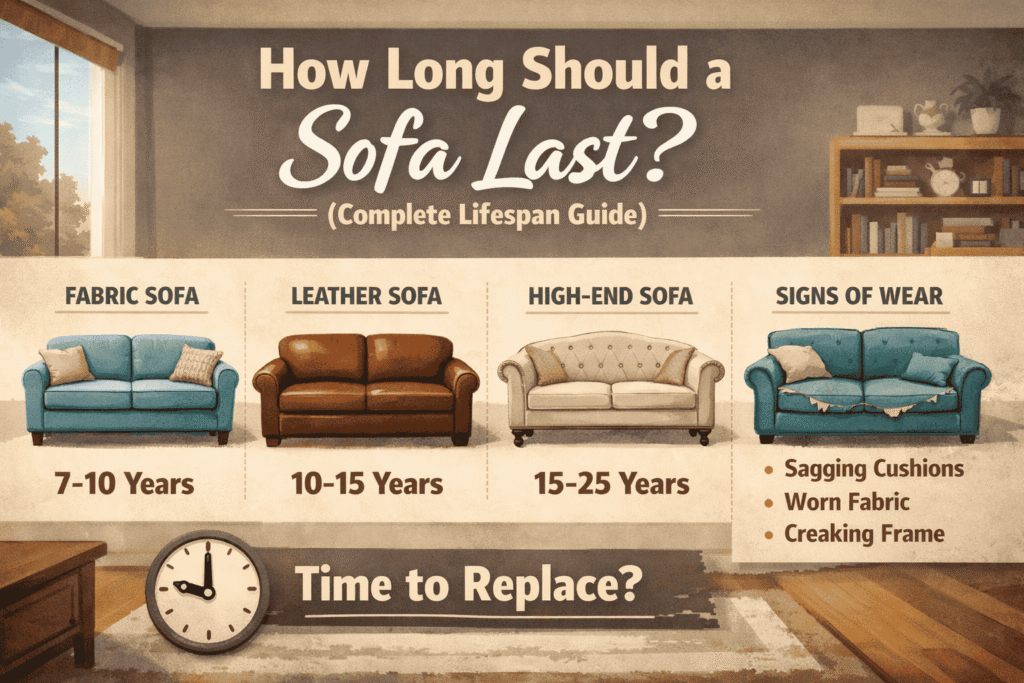
When people ask how long a sofa should last, the answer often depends on the type of sofa you own. Different materials, construction quality, and usage levels all play a big role in determining lifespan. Below is a simple breakdown to help you understand what to expect from each sofa type.
Fabric Sofas
Fabric sofas are the most common choice for homes because they are comfortable and affordable. On average, a good-quality fabric sofa lasts 7 to 15 years. However, exposure to spills, pets, or heavy daily use can shorten their lifespan. Regular cleaning and using protective covers can help extend their life.
Leather Sofas
Leather sofas are known for their durability and premium look. A high-quality leather sofa can last 15 to 20 years or even longer if properly maintained. Unlike fabric, leather resists stains better and ages gracefully, which is why many people choose it when they want a long-lasting investment.
Reclining Sofas
Reclining sofas include mechanical parts, which makes them more prone to wear and tear. On average, these sofas last 10 to 15 years, depending on how often the reclining mechanism is used. Regular maintenance of moving parts can help them last longer.
Sectional Sofas
Sectional sofas are built for larger families and heavy use. A well-constructed sectional typically lasts 10 to 15 years. Since they have multiple pieces, worn sections can sometimes be replaced individually, which helps extend their overall lifespan.
Budget vs. High-Quality Sofas
One of the biggest factors in determining how long a sofa should last is its build quality. Budget sofas made with low-quality frames and cushions may only last 5 to 7 years, while premium sofas with hardwood frames and high-density foam can last 15 to 25 years.
3. 7 Factors That Affect How Long a Sofa Lasts
If you’re wondering how long a sofa should last, the answer depends on several important factors. Not all sofas age the same way — some can stay comfortable for over a decade, while others start sagging within a few years. Below are the key things that directly impact your sofa’s lifespan.
1. Frame Quality
The frame is the backbone of any sofa. A strong, well-built frame can make a huge difference in durability.
- Hardwood frames (like oak or kiln-dried wood) can last 10–15+ years.
- Particleboard or plastic frames usually wear out much faster.
A weak frame often leads to wobbling, creaking, and early structural damage.
2. Cushion Density
Cushion quality plays a major role in comfort and longevity.
- High-density foam lasts longer and keeps its shape.
- Low-density cushions flatten quickly and cause sagging.
If your sofa loses support early, it may make you think about how long a sofa should last much sooner than expected.
3. Usage Level
How often a sofa is used directly affects its lifespan.
- Sofas in busy living rooms wear out faster.
- Guest room sofas can last many extra years.
Heavy daily use naturally shortens durability.
4. Kids and Pets
Households with children or pets often see quicker sofa wear.
- Scratches from pet claws
- Food spills and stains
- Jumping and rough use
These factors can significantly reduce how long a sofa remains in good condition.
5. Fabric or Material Type
The upholstery material greatly impacts durability.
- Leather sofas usually last the longest.
- Performance fabrics resist stains and wear.
- Cheap fabrics fade and tear quickly.
Choosing the right material is key when deciding how long a sofa should last in your home.
6. Maintenance and Cleaning
Regular care can add years to a sofa’s life.
- Vacuum weekly
- Clean spills immediately.
- Rotate cushions regularly
Poor maintenance is one of the biggest reasons sofas wear out early.
7. Environment and Placement
Where you place your sofa matters more than most people realise.
- Direct sunlight causes fading and cracking.
- Humid environments can damage fabric and frame.
- Placing near heat sources can dry out materials.
Proper placement helps preserve both comfort and appearance.
Quick Summary
To answer the question of how long a sofa should last, remember that quality, usage, material, and care all work together. A well-made and properly maintained sofa can easily last 7–15 years or even longer.
4. Signs Your Sofa Needs Replacement
If you’re wondering how long a sofa should last, the answer often depends on how well it has held up over time. Even a high-quality sofa will eventually show clear signs of wear and tear. Knowing when to replace your sofa can save you from discomfort, poor support, and unnecessary repair costs. Here are the most common signs that it may be time for a new one.
1. Sagging Cushions and Loss of Support
One of the biggest warning signs is sagging cushions. If your sofa feels uneven, dips in the middle, or no longer provides proper support, it usually means the foam or springs inside have worn out. Over time, this can also cause back or posture problems, making the sofa uncomfortable for daily use.
2. Visible Frame Damage
A strong frame is what gives a sofa its durability. If you notice creaking sounds, loose arms, cracks in the wooden frame, or wobbling when you sit down, the structure is likely weakened. Once the frame starts failing, repairs are often expensive and not always effective.
3. Persistent Odours and Stains
If your sofa holds on to odours from spills, pets, or moisture even after deep cleaning, it may be time to replace it. Old upholstery can trap dirt, bacteria, and allergens that are difficult to remove completely, affecting both comfort and hygiene.
4. Worn-Out Fabric or Peeling Leather
Faded colours, torn fabric, or peeling leather are clear signs of ageing. Besides making your living space look outdated, damaged upholstery can continue to deteriorate quickly, reducing the overall lifespan of your sofa.
5. Noisy Springs or Uneven Seating
If you hear squeaking or feel uneven support when sitting, the internal springs may be broken or loose. This not only affects comfort but also indicates the sofa is nearing the end of its usable life.
6. Frequent Repairs Are Needed
If you find yourself constantly fixing loose legs, replacing cushions, or repairing upholstery, it may cost more in the long run than buying a new sofa. At this point, replacing it is usually the smarter option.
7. Reduced Comfort Over Time
Comfort is the main reason we use a sofa. If it no longer feels cosy, causes discomfort after sitting, or doesn’t provide proper back support, it’s a strong sign it’s time for an upgrade.
Final Thought
Understanding these warning signs helps answer the common question: how long should a sofa last? Most sofas can last between 7 and 15 years, but once you start noticing multiple issues from this list, it’s usually a clear signal that replacement is the best choice for comfort, safety, and style.
5. How to Make Your Sofa Last Longer
If you’ve ever wondered how long should a sofa last, the truth is that proper care makes a huge difference. A high-quality sofa can last 10–15 years — or even longer — if you maintain it the right way. Simple habits can protect the frame, cushions, and fabric, helping you get the most value from your investment.
Here are the most effective ways to extend the lifespan of your sofa.
1. Clean Your Sofa Regularly
Dust, dirt, and debris slowly wear down fabric fibers and upholstery. Over time, this can make your sofa look old and feel rough.
What to do:
- Vacuum your sofa weekly using an upholstery attachment
- Clean spills immediately to prevent stains
- Use fabric-safe cleaners when needed
Regular cleaning not only keeps your sofa looking fresh but also plays a major role in determining how long should a sofa last in a busy household.
2. Rotate and Fluff Cushions
One of the biggest reasons sofas wear out quickly is uneven cushion use. Sitting in the same spot every day causes sagging and loss of shape.
Simple habit:
- Rotate cushions every 1–2 weeks
- Flip reversible cushions regularly
- Fluff them to maintain firmness
This helps distribute weight evenly and prevents early cushion breakdown.
3. Keep Your Sofa Away From Direct Sunlight
Sunlight may seem harmless, but UV rays can fade fabric and dry out leather over time.
Prevention tips:
- Avoid placing sofas near windows
- Use curtains or blinds to block strong sunlight
- Apply leather conditioner for leather sofas
Protecting your sofa from sunlight is essential if you want to maximize how long it lasts.
4. Use Sofa Covers or Throws
Covers act as a protective barrier against daily wear, spills, pet hair, and stains.
Benefits include:
- Easy to wash and replace
- Prevents fabric damage
- Ideal for homes with kids or pets
Using covers is one of the easiest ways to extend how long a sofa should last in an active household.
5. Avoid Jumping or Excessive Weight
Sofas are designed for sitting, not rough use. Jumping or placing heavy loads can weaken the frame and springs.
Best practice:
- Teach kids not to jump on the sofa
- Avoid sitting on armrests
- Do not overload seating beyond its capacity
Taking care of the internal structure significantly increases lifespan.
6. Maintain the Sofa Frame
The frame is the backbone of your sofa. If it weakens, the entire sofa becomes unstable.
Maintenance tips:
- Tighten loose screws or joints
- Avoid dragging the sofa when moving it
- Lift it properly during relocation
A strong frame ensures your sofa lasts for many years.
7. Schedule Deep Cleaning Once a Year
Professional or deep cleaning removes embedded dirt and restores fabric quality.
This is especially helpful for:
- Light-colored sofas
- High-traffic households
- Allergy-sensitive environments
Deep cleaning helps preserve materials and supports a longer sofa lifespan.
Final Tip
If you want to maximize how long should a sofa last, remember this simple rule:
6. When Should You Replace a Sofa?
Knowing how long a sofa should last is important, but it’s just as important to recognise when it’s time to replace it. Most sofas typically last 7–15 years, depending on quality, usage, and maintenance. However, you shouldn’t rely on age alone — there are clear signs that tell you when a replacement is needed.
One of the biggest indicators is loss of comfort. If your sofa feels saggy or uneven or causes back pain, the cushions and support system are likely worn out. Another major sign is a damaged frame. Creaking sounds, wobbling, or visible cracks usually mean the internal structure is failing.
You should also consider replacing your sofa when repair costs become too high. If fixing cushions, springs, or upholstery costs nearly as much as buying a new sofa, replacement is the smarter choice.
Lastly, lifestyle changes can matter. For example, moving to a new home, redecorating, or needing more seating space are practical reasons to upgrade.
In simple terms, if your sofa is uncomfortable, damaged, or no longer fits your needs, it’s probably time for a new one — even if it hasn’t reached its full expected lifespan.
7. Conclusion
So, how long should a sofa last? On average, a good-quality sofa can last anywhere from 7 to 15 years, while premium, well-maintained models may last even longer. However, lifespan isn’t just about time — it also depends on factors like build quality, daily use, care, and your living environment.
The key is to pay attention to signs of wear, such as sagging cushions, frame damage, or reduced comfort. Regular maintenance and proper use can significantly extend your sofa’s life, helping you get the most value from your investment.
In the end, the best approach is simple: choose a durable sofa, care for it properly, and replace it when it no longer provides the comfort, support, or style your home need.
8. FAQs
Q1.Can a sofa last 20 years?
yes, if it is high quality, well-maintained, and not subjected to extreme daily abuse.
Quality Construction: Hardwood frames, kiln-dried wood, and eight-way hand-tied springs are key to longevity.
Maintenance: Regularly flipping cushions, vacuuming, and cleaning help reach 20–30 years.
Material: Top-grain leather can last 15+ years, often outlasting fabric, and develops a patina over time.
Q2.How often should you replace a couch?
Budget/Low-End: 5–7 years.
Mid-Range: 7–10 years.
High-End: 10–15+ years.
Signs to Replace: The frame is broken/creaking, springs are sagging, cushions have lost all support, or the upholstery is severely worn or torn.
Q3.What type lasts longest?
Frame: Kiln-dried solid hardwood (oak, maple, birch).
Material: Top-grain leather is the most durable, followed by high-performance fabrics like microfiber or synthetic blends.
Maintenance: Regularly flipping cushions, vacuuming, and cleaning help reach 20–30 years.
Construction: Solidly constructed joints (dowelled, corner-blocked) last longer than stapled particleboard