
Introduction
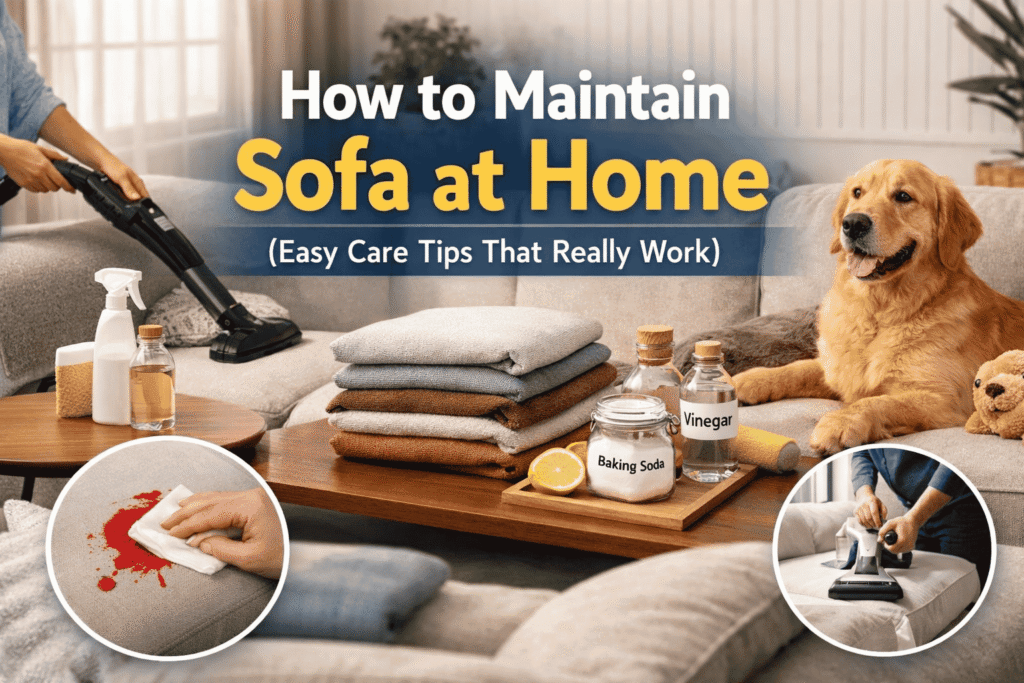
A sofa is more than just a piece of furniture—it’s where we relax, entertain guests, and spend quality time with family. Over time, wear and tear, spills, dust, and pet hair can take a toll on its appearance and comfort. That’s why knowing how to maintain sofa at home is essential for keeping it clean, comfortable, and long-lasting.
Table of Contents
Why Sofa Maintenance Matters
- Understanding how to maintain a sofa at home is important because a sofa is one of the most used pieces of furniture in any house. It is where families sit together, guests are welcomed, and daily relaxation happens. Without proper care, a sofa can quickly lose its comfort, beauty, and durability.
- Regular sofa maintenance helps extend its lifespan. Dust, dirt, and small stains may seem harmless at first, but over time they can damage the fabric, weaken materials, and cause permanent discolouration. Simple cleaning habits can prevent these issues and keep your sofa looking new for many years.
- Another reason sofa care matters is home hygiene. Sofas easily collect dust, bacteria, food crumbs, and pet hair. If not cleaned regularly, this can lead to bad smells and even allergies. Proper maintenance ensures a cleaner and healthier living environment for your family.
- Maintaining your sofa also helps you save money. A well-cared-for sofa does not need frequent repairs or early replacement. Small efforts like vacuuming, cleaning spills quickly, and protecting the fabric can prevent costly damage in the future.
- Finally, regular care keeps your sofa comfortable and attractive. Clean cushions, fresh fabric, and a neat appearance make your living space feel more inviting and stylish. This is why learning how to maintain a sofa at home is not just about cleaning — it is about protecting your investment and keeping your home comfortable.
Daily Sofa Maintenance Tips
- If you want your furniture to stay clean, comfortable, and long-lasting, learning how to maintain a sofa at home starts with simple daily habits. Small actions done every day can prevent dust buildup, stains, and early wear. Here are easy and practical daily sofa care tips anyone can follow.
- 1. Keep Your Sofa Dust-Free
- Dust settles on sofas very quickly, especially on fabric surfaces. Use a soft cloth, lint roller, or a quick handheld vacuum to remove dust daily. This prevents dirt from getting deep into the fabric and keeps your sofa looking fresh.
- 2. Arrange and Fluff Cushions Regularly
- Sofa cushions lose their shape if they are used in the same position every day. Make it a habit to fluff and adjust them daily. This helps maintain comfort, prevents sagging, and keeps the sofa looking neat.
- 3. Avoid Eating on the Sofa
- Food crumbs and drink spills are the biggest causes of stains and bad smells. Try to avoid eating while sitting on the sofa. If spills happen, clean them immediately to prevent permanent marks.
- 4. Keep Pets Off the Sofa (If Possible)
- Pet hair, scratches, and dirt can quickly damage your sofa. Use a sofa cover or train pets to stay off the furniture to reduce daily wear and tear.
- 5. Protect from Direct Sunlight
- Placing your sofa under strong sunlight can fade colours and weaken fabric over time. If your sofa is near a window, use curtains or blinds to protect it.
- 6. Avoid Overloading the Sofa
- Sitting properly and avoiding jumping or standing on the sofa helps protect its frame and cushions. This simple habit plays a big role in how to maintain a sofa at home effectively.
- 7. Keep Hands Clean Before Use
- Dirty hands transfer oil, sweat, and dust to the sofa fabric. Encouraging clean habits can greatly reduce stains and keep your sofa hygienic.
- By following these simple daily tips, you can keep your sofa clean, comfortable, and long-lasting without much effort. Consistency is the key when learning how to maintain a sofa at home successfully.
Weekly Sofa Cleaning Routine
- A proper weekly cleaning routine is an essential part of how to maintain a sofa at home. Regular weekly care prevents dirt buildup, keeps your sofa fresh, and helps extend its lifespan. The good news is that you don’t need expensive tools or professional services—just a simple, consistent routine.
- 1. Vacuum the Sofa Thoroughly
- Start by vacuuming your sofa using a brush attachment. Focus on:
- Seat cushions
- Backrests
- Armrests
- Corners and gaps
- Dust, crumbs, and pet hair collect quickly in hidden areas, so weekly vacuuming prevents dirt from settling deep into the fabric.
- 2. Remove and Clean Cushions
- Take off removable cushions and shake them outside to remove loose dust. If your cushion covers are washable, check the label and wash them according to instructions. Clean cushions help maintain hygiene and improve comfort.
- 3. Brush Fabric Sofas
- For fabric sofas, use a soft brush to gently remove surface dirt. Brushing also keeps the fabric looking fresh and prevents dust from embedding into fibres.
- 4. Clean Armrests and High-Touch Areas
- Armrests and head areas collect oils, sweat, and dirt faster than other parts. Wipe them weekly using a slightly damp cloth or a mild cleaning solution.
- 5. Remove Pet Hair and Lint
- If you have pets, use a lint roller or rubber glove to remove hair. Pet fur can quickly accumulate and affect both cleanliness and sofa appearance.
- 6. Check for Small Stains
- During your weekly routine, inspect your sofa for any new stains. Cleaning them early prevents permanent marks and makes maintenance easier.
- ✔ Quick Weekly Cleaning Tip
- Set a fixed day each week for sofa cleaning. Consistency is the key to successfully following How to Maintain a Sofa at Home and keeping your furniture looking new for years.
How to Remove Common Sofa Stains at Home
Keeping your sofa clean is an important part of how to maintain a sofa at home. Stains are unavoidable, but the good news is that most common sofa stains can be removed easily using simple household items—if you act quickly and use the right method.
Below are easy, safe, and effective ways to remove common sofa stains at home without damaging the fabric.
1. Food Stains
Food spills are one of the most common sofa problems.
How to clean:
- Carefully lift away any food residue with the edge of a spoon, making sure not to press it deeper into the fabric.
- Mix mild liquid soap with lukewarm water
- Soak a soft, clean cloth in the mixture, then gently dab the stained area to lift the mark.
- Do not rub—blot gently until the stain fades.
- Let the area air dry.
Tip: Always test the solution on a hidden area first.
2. Tea, Coffee, or Juice Stains
Drink stains can leave dark marks if ignored.
How to clean:
- Blot the spill immediately with a dry cloth.
- Mix equal parts white vinegar and water
- Dab the stain gently using a soft cloth.
- Wipe with clean water and let dry naturally
This method works well and is safe when learning how to maintain a sofa at home naturally.
3. Oil and Grease Stains
Grease stains attract dirt and spread quickly.
How to clean:
- Sprinkle baking soda or cornflour on the stain.
- Leave it for 15–20 minutes to absorb oil.
- Vacuum the powder gently.
- If needed, blot with mild soap and water.
Avoid using too much water, as it can spread the stain further.
4. Ink Stains
Ink stains need quick attention.
How to clean:
- Dab a cotton ball with rubbing alcohol.
- Lightly tap the stain (do not rub).
- Keep changing cotton balls to avoid spreading ink.
- Let the area dry completely.
This method works best for fabric sofas.
5. Pet Stains and Odours
Pet stains can cause bad smells if not treated properly.
How to clean:
- Blot excess moisture with paper towels
- Mix baking soda and vinegar
- Apply lightly and let it fizz
- Wipe with a damp cloth and air dry
This also helps remove odour and keeps your sofa fresh.
Important Tips to Prevent Damage
- Never scrub harshly.
- Avoid bleach or strong chemicals.
- Use minimal water
- Always blot, never rub
Final Note
Knowing how to remove stains properly is a key step in how to maintain a sofa at home. Quick action, gentle cleaning, and regular care will keep your sofa looking clean, fresh, and long-lasting.
Deep Cleaning Tips for Different Sofa Types
Keeping your sofa clean is essential for both comfort and longevity. Knowing how to maintain a sofa at home depends on the type of sofa you own. Here’s a detailed guide for deep cleaning various sofa materials safely and effectively.
1. Fabric Sofas
Fabric sofas are popular for their comfort but can absorb dirt and stains easily. To deep clean:
- Vacuum first: Remove dust, crumbs, and pet hair using a vacuum cleaner with an upholstery attachment.
- Treat stains immediately by gently dabbing them with a solution of water and a mild cleaning agent. Dampen a soft cloth, gently blot the stain, and avoid rubbing to prevent fabric damage.
- Steam clean: For a thorough deep clean, a fabric-safe steam cleaner can remove embedded dirt and refresh the sofa.
- Dry properly: Let the sofa air dry completely before use to avoid mould or mildew.
2. Leather Sofas
Leather sofas need careful upkeep to preserve their rich and elegant appearance. Here’s how to deep clean them:
- Dust and wipe: Use a soft, dry cloth to remove surface dust.
- Mild cleaning Solution: Mix water with a small amount of gentle soap. Dampen a cloth and wipe the leather carefully. Avoid soaking.
- Condition the leather: After cleaning, apply a leather conditioner to keep the material supple and prevent cracks.
- Avoid harsh chemicals: Never use bleach, ammonia, or alcohol-based cleaners, as they can damage the leather.
3. Velvet Sofas
Velvet sofas look elegant but need delicate care. Deep cleaning velvet requires:
- Vacuum gently: Use a brush attachment to lift dust and dirt without crushing the fabric.
- Spot treatment: Mix a small amount of dish soap with water, apply lightly with a soft cloth, and blot the stain.
- Use a soft brush: Once dry, brush the fabric lightly to restore the pile and maintain the sofa’s texture.
- Avoid excessive moisture: Velvet can be damaged by too much water, so always use minimal dampness.
4. Wooden or Frame-Integrated Sofas
Sofas with wooden frames or accents also need attention:
- Dust regularly: Use a microfibre cloth to clean dust from wooden parts.
- Polish occasionally: Apply wood polish or wax to maintain shine and protect from scratches.
- Check joints: Tighten screws and bolts periodically to ensure the sofa stays sturdy.
- Avoid water damage: Never soak wooden parts; use slightly damp cloths for cleaning spills.
By following these deep cleaning tips for different sofa types, you can keep your furniture fresh, hygienic, and long-lasting. Regularly practising these steps is a crucial part of how to maintain a sofa at home and ensures that your sofa remains a comfortable and stylish centrepiece in your living space.
Things You Should NEVER Do to Your Sofa
Knowing what not to do is just as important as knowing how to clean and care for your furniture. Avoiding these common mistakes is a key part of how to maintain a sofa at home and can save you from costly repairs or permanent damage.
1. Don’t Use Harsh Chemicals
Strong chemicals, bleach, or ammonia-based cleaners can strip fabrics, fade colours, or even damage leather. Always choose gentle cleaning agents or natural solutions. Using harsh products can ruin your sofa and shorten its lifespan.
2. Avoid Excess Water
Oversaturating your sofa with water can lead to mould, mildew, and fabric deterioration. Whether it’s a fabric or leather sofa, always use minimal moisture and allow it to dry completely after cleaning.
3. Never Ignore Stains
Leaving spills and stains unattended allows dirt to set and become nearly impossible to remove. Immediate attention with proper cleaning methods is essential. Quick action helps maintain both the appearance and hygiene of your sofa.
4. Don’t Place Near Heat Sources
Direct sunlight, radiators, or heaters can fade colours, dry out leather, and warp wooden frames. Keep your sofa away from heat to prevent cracks, discolouration, and material damage over time.
5. Avoid Jumping or Overloading
Sitting on the arms, jumping, or placing excessive weight on your sofa can weaken the frame and cushions. This not only affects comfort but can also lead to sagging and structural damage.
By steering clear of these mistakes, you ensure your furniture remains comfortable, stylish, and long-lasting. Understanding what not to do is a crucial part of how to maintain a sofa at home, helping your sofa stay in top condition for years to come.
Best Natural DIY Sofa Cleaning Solutions
If you want to keep your sofa fresh and spotless without harsh chemicals, natural cleaning solutions are a safe and effective choice. Knowing how to maintain a sofa at home with DIY methods not only protects your furniture but also ensures a healthier living environment. Here are some of the best natural solutions you can use.
1. Baking Soda for Odours and Stains
Baking soda is a powerful natural cleaner that helps remove odours and lift light stains from fabric sofas.
How to use:
- Sprinkle a thin layer of baking soda over the sofa.
- Allow it to rest for 15–20 minutes so it can soak up any lingering odours.
- Vacuum thoroughly using an upholstery attachment.
- For stains, make a paste of baking soda and water, apply to the stain, gently blot, and wipe clean.
2. Vinegar Solution for Tough Stains
White vinegar is excellent for breaking down stubborn stains and disinfecting the surface.
How to use:
- Combine an equal amount of white vinegar and water in a spray container.
- Lightly mist the stained area.
- Carefully dab the area with a fresh cloth, steering clear of rubbing to protect the fabric.
- Let the sofa air dry completely.
3. Mild Soap and Water
A simple mix of mild soap and water is one of the easiest DIY solutions for everyday sofa cleaning.
How to use:
- Dissolve a few drops of mild liquid soap in warm water.
- Dampen a soft cloth with the solution and wipe the sofa gently.
- Rinse the cloth with clean water and wipe again to remove soap residue.
- Allow the sofa to air dry fully.
4. Lemon Juice for Leather Sofas
Lemon juice can help clean and brighten leather sofas naturally while removing minor stains.
How to use:
- Mix equal parts lemon juice and olive oil.
- Apply a small amount to a soft cloth and rub gently on the leather.
- Wipe off excess with a dry cloth and let the leather absorb the mixture.
5. Essential Oils for Freshness
Adding a few drops of essential oils like lavender or tea tree oil to your cleaning solution can keep your sofa smelling fresh and prevent bacteria buildup.
How to use:
- Add 3–5 drops of your preferred essential oil to a cup of water or a mild cleaning solution.
- Spray lightly or apply with a damp cloth while cleaning.
- Enjoy a naturally fresh and pleasant-smelling sofa.
By using these natural DIY sofa cleaning solutions, you can keep your furniture clean, fresh, and safe for your family. Regular application of these methods is a key part of how to maintain a sofa at home, ensuring long-lasting comfort and a healthier living space.
How Often Should You Maintain Your Sofa?
Maintaining your sofa regularly is key to keeping it clean, comfortable, and long-lasting. But how often should you maintain your sofa? The answer depends on your lifestyle, sofa type, and how much daily use it gets. Here’s a practical guide to help you stay on top of sofa care.
1. Daily Maintenance
Daily maintenance may seem minor, but it prevents bigger problems later. Simple tasks include:
- Fluffing and rotating cushions to maintain shape
- Wiping down spills immediately to avoid stains
- Keeping pets and shoes off the sofa
- Removing dust and crumbs with a small handheld vacuum or soft brush
Even spending just 5 minutes a day on these habits can significantly extend the life of your sofa.
2. Weekly Cleaning
A weekly routine goes a step further than daily care. It typically includes:
- Vacuuming the entire sofa, including crevices
- Brushing fabric sofas to prevent dirt buildup
- Cleaning armrests, corners, and high-contact areas
- Removing pet hair and lint
Weekly maintenance ensures your sofa stays hygienic and reduces the risk of permanent stains.
3. Monthly Deep Cleaning
Once a month, a deeper cleaning can help maintain your sofa’s appearance and comfort:
- Wash or spot-clean removable cushion covers
- Apply leather conditioner for leather sofas
- Treat stains with safe, fabric-appropriate cleaning solutions
- Check for signs of wear, such as sagging cushions or loose stitching.
Monthly maintenance keeps your sofa looking fresh and prevents long-term damage.
4. Annual Professional Care
Even with regular home maintenance, professional cleaning once a year is highly recommended. Experts can:
- Deep-clean hard-to-reach areas
- Remove stubborn stains
- Restore fabric or leather to its original condition
- Extend your sofa’s overall lifespan
Tip: Combining daily, weekly, monthly, and annual care ensures your sofa stays clean, comfortable, and long-lasting. By following this routine, you’re not just maintaining your furniture—you’re protecting your investment and keeping your home inviting.
Signs Your Sofa Needs Immediate Maintenance
Maintaining your sofa is essential to keep it looking fresh, comfortable, and long-lasting. So, how can you tell when your sofa requires immediate attention? Recognising the signs your sofa needs immediate maintenance can save you from costly repairs or early replacement.These are the main warning signs you should pay attention to.
1. Sagging or Uneven Cushions
If your sofa cushions have started to sag or feel uneven, it’s a clear sign that the internal foam or springs are wearing out. Sagging cushions not only make sitting uncomfortable but also put extra stress on the sofa frame. Immediate maintenance, such as fluffing, rotating, or replacing the cushions, can prevent further damage.
2. Visible Stains or Spills
Food, drinks, and everyday accidents can leave stains on your sofa. When these stains are ignored for too long, they can set permanently and damage the fabric or leather. Spot cleaning as soon as you notice stains is crucial to maintain both the appearance and hygiene of your sofa.
3. Foul Odours
A musty or unpleasant smell coming from your sofa indicates dirt, bacteria, or mould build-up. This can happen due to spills, sweat, or pet accidents. If your sofa starts smelling, it’s a strong sign your sofa needs immediate maintenance. Deep cleaning or professional treatment is recommended to eliminate odours completely.
4. Fabric Fading or Peeling
Constant exposure to sunlight or harsh cleaning chemicals can cause fabric to fade or leather to peel. If you notice colour changes, cracks, or peeling on your sofa, prompt care is essential. Regular maintenance like conditioning leather or using sofa covers can prevent permanent damage.
5. Loose or Broken Frame
“A sofa’s durability begins with a sturdy, well-built frame.”
. If you hear creaking sounds when sitting or notice parts of the frame wobbling, your sofa needs immediate attention. Tightening screws, repairing joints, or reinforcing the frame can restore stability and prolong the sofa’s life.
6. Accumulation of Dust, Pet Hair, or Dirt
Even if your sofa looks clean, accumulated dust, pet hair, and dirt can degrade the fabric and affect air quality. Excessive buildup is another sign your sofa needs immediate maintenance. Regular vacuuming and brushing can prevent long-term wear.
Conclusion:
Keeping an eye on these warning signs ensures your sofa stays comfortable, hygienic, and stylish. Recognising the signs your sofa needs immediate maintenance early allows you to act before minor issues turn into expensive problems, helping your sofa last for years.
Pro Tips to Make Your Sofa Last Longer
Knowing how to maintain a sofa at home goes beyond regular cleaning. With a few smart habits, you can extend your sofa’s lifespan, keep it looking fresh, and avoid costly replacements. Here are some professional tips:
1. Use Sofa Covers
Sofa covers protect your furniture from spills, stains, dust, and pet hair. They act as a barrier, keeping the fabric or leather underneath in pristine condition. For families with kids or pets, covers are a simple and effective way to preserve your sofa’s look and feel.
2. Rotate and Fluff Cushions Regularly
Uneven wear occurs when cushions are not rotated or fluffed. Rotate them weekly and fluff them to maintain their shape. This prevents sagging and ensures consistent comfort while distributing pressure evenly across the sofa.
3. Keep Pets Away From the Sofa
Pets can cause scratches, fur accumulation, and odors. If pets are allowed on the sofa, consider a dedicated blanket or cover to protect the surface. Regular brushing and grooming of your pets can also reduce hair and dirt transfer.
4. Protect Your Sofa From Direct Sunlight
Sunlight can fade colours and weaken the fabric or leather over time. Place your sofa away from windows or use curtains and blinds to limit exposure. This simple step helps maintain your sofa’s colour and structural integrity.
5. Schedule Professional Cleaning Once a Year
Even with regular home care, deep cleaning is necessary to remove embedded dirt, allergens, and stubborn stains. Professional cleaning services know the right techniques for different sofa materials, keeping your furniture safe and long-lasting.
6. Handle Spills Immediately
Quick action is crucial. Blot spills immediately with a clean cloth and use suitable cleaning solutions. Ignoring stains can lead to permanent damage and make your sofa harder to maintain.
By following these pro tips, you’ll not only enhance your sofa’s lifespan but also keep it looking stylish and comfortable. Implementing these strategies ensures you’re effectively practising how to maintain a sofa at home in the smartest way possible.
Conclusion
Taking care of your sofa doesn’t have to be complicated. By learning how to maintain sofa at home with regular cleaning, proper cushion care, and smart protective habits, you can keep your furniture looking fresh, comfortable, and long-lasting. Small daily actions, combined with periodic deep cleaning and professional care, ensure your sofa stays a centerpiece of your home for years to come. Start implementing these tips today and enjoy a cleaner, cozier, and more durable living space.
FAQs
Q1.How do you maintain a sofa at home daily?
To maintain a sofa daily, vacuum regularly, fluff and rotate cushions, wipe spills immediately, and keep it free from dust and pet hair. Small daily habits go a long way in preserving your sofa’s appearance and comfort.
Q2.What is the best way to clean a sofa at home?
The best way to clean a sofa depends on its material. Fabric sofas respond well to vacuuming, gentle brushing, and mild soap solutions. Leather sofas benefit from a damp cloth and leather conditioner. Always check the manufacturer’s instructions before using any cleaning method.
Q3.How often should I deep clean my sofa?
Deep cleaning is recommended every 6 to 12 months. This includes shampooing fabric sofas, professional leather cleaning, or steam cleaning to remove embedded dirt, dust mites, and allergens.
Q4.Can baking soda clean a sofa effectively?
Yes, baking soda is a natural cleaner that helps remove odors and stains from fabric sofas. Sprinkle it on the surface, let it sit for 15–30 minutes, then vacuum it off. It’s a safe and cost-effective way to maintain your sofa at home.
Q5.How can I prevent my sofa from wearing out quickly?
Protect your sofa with covers, avoid direct sunlight, rotate cushions regularly, keep pets away, and address spills immediately. Consistent care and mindful usage are key steps in prolonging your sofa’s lifespan.