
Introduction
An L-shaped sofa can transform your living room by providing comfortable seating, creating a relaxing corner, and making better use of available space. Whether your home is a cozy apartment or a large family house, selecting a suitable L-shaped sofa can bring together everyday comfort, attractive design, and practical use of space.
However, buying the perfect sofa involves more than choosing an attractive color. You need to consider room measurements, seating orientation, upholstery, cushion support, frame quality, and your budget. The wrong size or configuration can make a room feel crowded, while a well-chosen design can make it more inviting.
In this ultimate L-shaped sofa guide, you will discover nine smart ideas for choosing the right model, arranging it in your living room, maintaining its appearance, and avoiding common buying mistakes.
Table of Contents
What Is an L-Shaped Sofa?
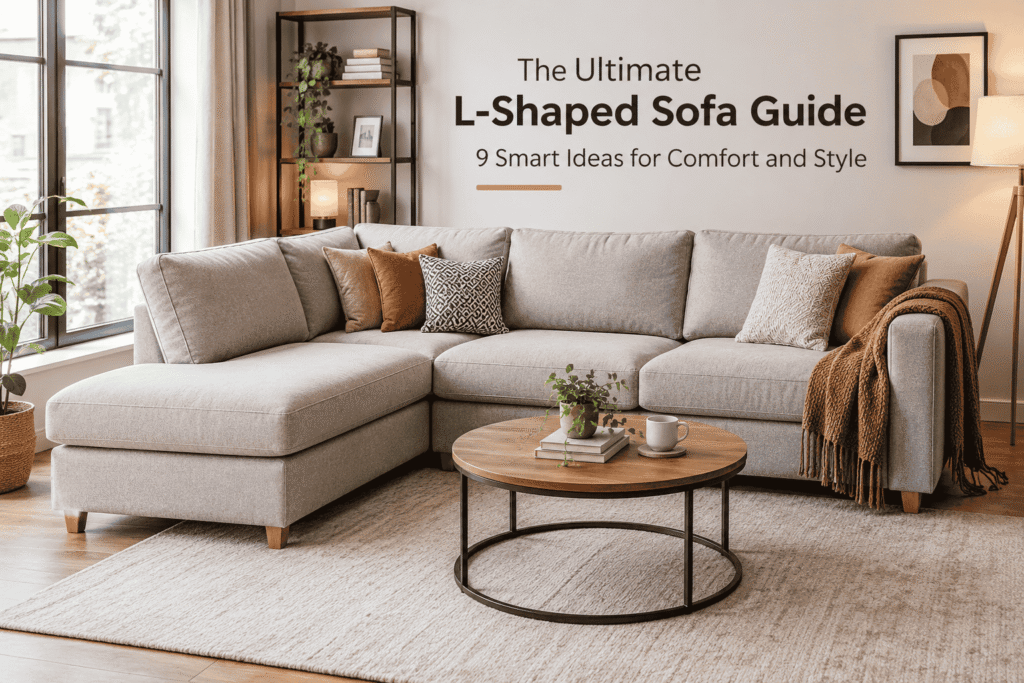
An L-shaped sofa is a seating arrangement with two connected sections positioned at an angle to form the shape of the letter L. Usually, one section is longer than the other, giving you space to sit upright while also providing an area to stretch out.
This sofa style is popular in modern homes because it combines several seating positions in one piece of furniture. Depending on the design, it may fit against two walls, sit in a corner, or divide an open-plan living area into separate zones.
L-shaped sofas are available in different materials, sizes, colors, and configurations. Some have a fixed chaise section, while others feature separate modules that can be rearranged.
L-Shaped Sofa vs Corner Sofa vs Sectional Sofa
These terms often overlap, but there are useful differences to understand.
- L-shaped sofa: A sofa arrangement with two sections forming an L.
- Corner sofa: A sofa designed to turn around a corner, often with a longer seat on each side of the corner.
- Sectional sofa: A sofa made from multiple sections that may be connected in different configurations.
- Chaise sofa: A sofa with an extended seat that allows you to stretch your legs. Some chaise sofas form an L-shaped arrangement.
The best choice depends on your room dimensions, preferred seating position, and whether you want a fixed or flexible layout.
9 Smart Ideas for Choosing and Styling an L-Shaped Sofa
1. Measure Your Living Room Before Buying
One of the most important steps is measuring your room before ordering an L-shaped sofa. A design that looks compact in a showroom may occupy much more space in your home.
Start by measuring the length and width of the available area. Then measure both sides of the proposed sofa footprint, including the extended chaise or return section.
Check the following before making a purchase:
- Wall space: Confirm that the sofa fits the intended position.
- Walking routes: Leave enough room for people to move comfortably.
- Doors and windows: Avoid blocking entrances, windows, and essential access points.
- Coffee table space: Allow room to reach the table without squeezing between furniture.
- Delivery access: Measure doorways, corridors, staircases, and tight turns.
Do not rely on the overall width alone. The depth of the longer section can affect how much usable floor space remains.
A simple way to check the layout is to mark the sofa’s dimensions on the floor using masking tape. This helps you visualize its footprint before committing to the purchase.
Also, check the manufacturer’s complete dimensions, including the armrests and any removable or extended components.
2. Choose the Correct Left-Hand or Right-Hand Layout
L-shaped sofas commonly come in left-hand and right-hand configurations. Selecting the wrong orientation can make it difficult to position the sofa as planned.
The terms can vary between retailers, so never assume that every seller uses the same viewing convention.
Before buying, check the product diagram and confirm which side contains the extended chaise or return when viewed from the position specified by the retailer. If the description is unclear, ask the seller for clarification.
Consider these options:
- Left-hand configuration: Suitable when the longer return needs to sit on the left according to the retailer’s stated viewing direction.
- Right-hand configuration: Suitable when the return needs to sit on the right using that same convention.
- Reversible chaise: Allows the extended section to be positioned on either side, if the design supports it.
- Modular sofa: Uses separate components that may offer more flexibility when rearranging the room.
A reversible or modular model can be particularly useful if you expect to move home or change your furniture layout. However, always confirm how the sections connect and which configurations are supported.
3. Find the Best L-Shaped Sofa for a Small Living Room
An L-shaped sofa can work well in a small living room, but choosing the correct proportions is essential.
Instead of selecting the largest sofa that fits against a wall, consider how the furniture will affect movement and everyday activities.
Choose a compact design. Choosing a compact design with slim armrests helps maximize seating while keeping your living room feeling open and spacious.
Consider raised legs. A sofa with visible space beneath it can create a lighter visual appearance, although it does not reduce the actual footprint.
Avoid unnecessary bulk. Deep arms, oversized backs, and extra-wide chaise sections can make a small room feel crowded.
Use color carefully. Cream, beige, light grey, and other soft shades can help create a brighter appearance, especially when coordinated with the walls and flooring.
Keep the layout simple. A small side table or appropriately sized coffee table may work better than several bulky pieces of furniture.
Measure the complete seating arrangement rather than judging it by the number of seats advertised. A compact three- or four-seat design may be more practical than a larger model that restricts access to other parts of the room.
For more inspiration, explore our guide to sofa types explained, and compare different styles before deciding which shape suits your home.
4. Select a Fabric That Suits Your Lifestyle
The upholstery affects the appearance, feel, cleaning requirements, and everyday practicality of an L-shaped sofa. Choose a material based on how you use your living room rather than appearance alone.
Polyester
Polyester upholstery is available in a wide range of colors and textures. Some polyester fabrics are designed for regular household use and are relatively easy to maintain. Performance depends on the fabric construction, finish, and manufacturer’s care instructions.
Linen
Linen has a natural texture and a relaxed appearance that suits many contemporary interiors. It may crease more readily than some synthetic fabrics, and its cleaning requirements depend on the blend and finish.
Velvet
Velvet can add depth and a luxurious appearance to a living room. However, its pile may show marks or shading, and the level of maintenance required varies by fiber and construction.
Microfiber
Microfiber upholstery has a soft, fine texture. Certain varieties are practical for everyday use, but stain resistance and durability should be checked against the specific product’s specifications.
Leather
Leather offers a distinctive finish and can be relatively straightforward to wipe clean when cared for correctly. Different leather types have different levels of softness, surface protection, and susceptibility to scratches or marks.
Before purchasing, check the care label, cleaning instructions, and any fabric performance information provided by the manufacturer. If your household includes children or pets, prioritize upholstery that suits your cleaning routine.
You can also read our sofa materials explained guide to understand the differences between common upholstery options.
For additional background on leather, visit Leather Naturally.
5. Prioritise Seat Comfort and Cushion Support
An attractive L-shaped sofa is not necessarily comfortable. As you may use your sofa for everything from relaxing and reading to watching TV or entertaining guests, make sure it provides the right level of comfort and support for your daily needs.
Check the seat depth.
A deeper seat may suit people who enjoy lounging, while a shallower seat may make it easier to sit upright with feet supported. Your height and preferred posture should influence the choice.
Compare firm and soft cushions.
Firm cushions may provide a more supportive sitting feel, while softer cushions can feel more relaxed. Neither option is automatically better for everyone.
Understand cushion fillings
- Foam: Often maintains a more defined shape, depending on its density and quality.
- Fiber: Can create a softer feel but may require regular plumping.
- Feather: Can provide a relaxed, sink-in feel but generally requires frequent maintenance.
- Combination fillings: May balance softness and structure, depending on the materials used.
Also check the backrest height, armrest position, and support across the full seating area.
Try the sofa in person before making your final buying decision. If you are shopping online, read the specifications carefully, check the return policy, and look for reviews that discuss long-term comfort rather than first impressions alone.
6. Match the Sofa Color to Your Interior
The right color can help an L-shaped sofa blend into your living room or become its main visual feature.
Beige and cream: These shades work well with warm wood, neutral walls, and natural textures. They can create a calm appearance but may require more frequent cleaning in busy households.
Grey: Grey upholstery pairs with many modern interiors and can work with both warm and cool color schemes.
Brown: Brown leather or fabric can create a warm, grounded look and complement wooden furniture.
Green or blue: These colors can introduce character without relying on a vibrant shade.
Bold statement colors: A strong color can make the sofa a focal point, but consider whether it will work with your existing flooring, curtains, and decorative accessories.
Before deciding, compare fabric samples in your room’s lighting if the retailer offers them. A color can look different in daylight, warm evening light, and showroom lighting.
Use cushions, throws, and rugs to introduce contrast. These accessories are generally easier to change than the sofa itself, making them a practical way to update the room over time.
7. Make the Sofa Work in an Open-Plan Room
An L-shaped sofa can help define different areas in an open-plan living space without adding a physical divider.
For example, placing the sofa with its back facing the dining area can establish a clear lounge zone. This arrangement works best when there is enough space to walk around it comfortably.
Try these layout ideas:
- Position the sofa to create a natural boundary between seating and dining areas.
- Face the main seating section towards the television or central feature.
- Use a rug to visually connect the sofa, coffee table, and other lounge furniture.
- Add a floor lamp or side table to improve the usefulness of the seating corner.
- Keep walkways clear between entrances, windows, and adjoining rooms.
Think about how people will move through the space. Position the extended section so it doesn’t obstruct main walkways or everyday access around the room.
If the sofa will sit away from the wall, check its back finish and upholstery. Some models are designed to look attractive from every side, while others are intended mainly for placement against a wall.
8. Look Beyond Appearance to Build Quality
The frame, suspension, cushions, and upholstery all influence how an L-shaped sofa performs over time.
A low price does not automatically mean poor quality, and a high price does not guarantee superior construction. Compare the specifications and warranty rather than judging by appearance alone.
Frame construction: Look for clear information about the frame material, joints, and construction. Ask the seller about the support structure if details are missing.
Seat support: Check whether the sofa uses springs, webbing, or another suspension system. The quality of the overall construction matters more than the name of the system alone.
Cushion construction: Review the filling details and any guidance on plumping, rotation, or replacement.
Upholstery: Check the fabric composition and available information about abrasion resistance, colorfastness, and cleaning.
Warranty: Understand what is covered, how long the coverage lasts, and whether different components have different terms.
After-sales support: Find out whether replacement cushions or individual modular sections are available.
If you are comparing products online, read reviews from customers who have used the sofa for a reasonable period. Look for specific comments about sagging, loose stitching, frame noises, and customer service rather than relying only on star ratings.
For additional buying advice, consult the Which? sofa buying guide.
9. Consider Extra Features That Add Practical Value
Some L-shaped sofas include features that can make everyday life easier. However, extra features are worth paying for only when they suit your household.
Storage: Hidden compartments can provide space for blankets, cushions, and other living-room essentials. Check the storage capacity and whether the compartment is easy to access.
Reclining seats: Recliners offer additional lounging options, but the mechanism may require extra clearance. Measure the sofa in its fully extended position.
Sofa-bed conversion: A convertible design can be useful for overnight guests. Check the sleeping dimensions, opening mechanism, mattress comfort, and space needed when the bed is extended.
Modular sections: Separate components can provide more flexibility when moving or rearranging furniture. Confirm which arrangements are possible and whether additional modules are available.
Removable covers: Some sofas have removable covers that can make maintenance easier. However, removable does not necessarily mean machine washable, so follow the care instructions.
Choose only the extra features that match your daily needs and offer genuine practical benefits. A simple, well-built sofa may provide better value than a complicated design with extras that rarely serve a purpose.
What Are the Main Benefits of an L-Shaped Sofa?
An L-shaped sofa offers several practical advantages, depending on the room and the model you choose.
Efficient use of a corner
The shape can make use of a corner that might otherwise remain underused. It can also create a defined seating area without requiring separate armchairs.
Generous seating
The extended arrangement can provide room for family members and guests. Actual capacity depends on seat width, armrests, and the dimensions of the model.
Comfortable lounging
The longer section offers a place to stretch your legs while keeping the rest of the sofa available for conventional seating.
Useful for open-plan layouts
The sofa can establish a visual boundary between the living and dining areas while keeping the space open.
Wide choice of designs
You can find L-shaped sofas in different fabrics, colors, sizes, and styles, from simple contemporary designs to more traditional upholstered models.
The main benefit is flexibility: the right configuration can combine seating and relaxation in a single arrangement. However, the sofa must be properly sized for your room to deliver those advantages.
Are There Any Disadvantages to L-Shaped Sofas?
Although an L-shaped sofa can be practical, it is not the ideal option for every home.
- Space limitations: A large model may dominate a narrow room or restrict movement.
- Layout restrictions: A fixed return may not suit the arrangement of doors, windows, or other furniture.
- Moving difficulties: Large or heavy models may be harder to transport through tight entrances.
- Higher overall cost: Some models cost more than simpler sofas because of their size, materials, or added features.
- Maintenance requirements: Cleaning a large sofa can take more time, especially when it has many cushions or difficult-to-reach corners.
Consider how often you rearrange your living room and whether you may move home in the future. A modular or reversible design may offer more flexibility, but its suitability depends on the specific construction.
L-Shaped Sofa vs Standard Sofa vs U-Shaped Sofa
Choosing the right sofa shape depends on your available space, seating needs, and how you use your living room. An L-shaped sofa offers a corner-friendly design, a standard sofa provides a simple and flexible arrangement, while a U-shaped sofa creates a larger seating area for families and guests.
| Feature | L-Shaped Sofa | Standard Sofa | U-Shaped Sofa |
|---|---|---|---|
| Space requirements | Works well in corners and medium to large rooms | Fits easily into many room sizes, including smaller spaces | Usually needs a large living room |
| Seating capacity | Often seats 3–5 people, depending on size | Commonly seats 2–4 people | Often seats 5 or more people |
| Room layout | Fits neatly into a corner or defines a seating zone | Easy to place against a wall or in the centre of a room | Creates a central seating area with an enclosed feel |
| Comfort and lounging | Provides an extended section for stretching out | Comfortable for everyday sitting, but usually offers less legroom for lounging | Gives several people space to relax and stretch out |
| Flexibility | Some models are reversible or modular; others have a fixed corner | Generally easy to move and rearrange | Can be harder to reposition because of its size |
| Typical household needs | Suitable for couples, families, and people who enjoy relaxing together | Ideal for smaller households, compact rooms, or simple layouts | Useful for larger families, frequent guests, and social gatherings |
Which Sofa Shape Should You Choose?
- Choose an L-shaped sofa if you want extra lounging space and an efficient way to use a corner.
- Choose a standard sofa if you prefer a straightforward design that is easy to position and combine with other furniture.
- Choose a U-shaped sofa if you have plenty of room and need generous seating for family gatherings or entertaining guests.
Before buying, measure your living room, doorways, and walking paths. Also consider whether the sofa will block windows, radiators, or access to other furniture. The right option is the one that fits your space and lifestyle comfortably—not simply the one with the most seats.
How to Arrange an L-Shaped Sofa in Your Living Room
Good placement helps you get the most from your sofa while keeping the room practical.
Place it in a corner.
If the room layout allows, position the sofa along two walls to make efficient use of the available space. Confirm that the return does not obstruct a door or window.
Float it in an open-plan room.
You do not always need to push the sofa against a wall. Placing it in the center of a larger space can separate the lounge from a dining or kitchen area.
Position it around your main focal point.
Arrange the primary seats towards the television, fireplace, or another feature. Check viewing angles and leave enough room for people to walk past.
Choose the right coffee table.
A coffee table should be proportionate to the sofa and easy to reach from the main seats. Consider a rounded or oval table if you want to soften the arrangement and reduce sharp corners in a busy walkway.
Keep the room balanced.
A large L-shaped sofa can make one side of the room feel visually heavy. Balance it with appropriately sized lighting, a rug, wall art, or a small occasional chair if there is enough room.
Leave clear walking routes.
Before finalizing the arrangement, walk through the room as you normally would. Check access to doors, windows, storage, and adjoining spaces.
How to Keep Your L-Shaped Sofa Clean and in Good Condition
Consistent maintenance can help your L-shaped sofa stay fresh, attractive, and comfortable for longer. Since different upholstery materials require different care methods, check the manufacturer’s instructions before using any cleaning product.
1. Remove Dust and Dirt Frequently
Vacuum your sofa regularly with an upholstery attachment designed for the material. Clean the seats, backrests, armrests, and spaces between cushions to collect dust, food particles, pet hair, and other debris. Give extra attention to the joints where the two sections connect, as dirt can easily accumulate there.
2. Deal With Spills as Soon as Possible
When a drink or other liquid lands on your sofa, gently press a clean, absorbent cloth against the affected area. Avoid scrubbing, because rubbing may push the stain deeper into the upholstery or spread it further. Follow the recommended treatment for your sofa’s material, and test any suitable cleaning solution on a hidden section before applying it to a visible area.
3. Look After the Seat Cushions
If your sofa has removable cushions, turn or reposition them when the manufacturer’s guidance allows it. This may help distribute everyday wear more evenly. Restore the shape of fiber- or feather-filled cushions according to their care instructions, and never force a cushion into a position that does not fit properly.
4. Reduce Wear on the Upholstery
Try to keep your sofa away from strong, prolonged sunlight, which may cause some fabrics and other upholstery materials to fade. Protect the surface from sharp objects, rough contact, and pet claws that could snag, scratch, or tear the covering.
5. Use Cleaning Products With Care
Not every upholstery cleaner is suitable for every sofa. An unsuitable product or excessive water may leave marks, affect the texture, or damage the material. Check the care label and use only cleaning methods approved for your particular upholstery.
For more useful advice, explore our sofa repair and maintenance guide and guide to caring for a sofa at home.
L-Shaped Sofa Shopping Mistakes Worth Avoiding
A little research before ordering can help you choose a sofa that suits your room, budget, and daily routine. Keep these common purchasing errors in mind.
1. Skipping measurements: Measure the available floor space and check the dimensions of doors, hallways, staircases, and other access points before ordering.
2. Getting the corner direction wrong: Confirm whether the design has a left-hand or right-hand return. Read the retailer’s instructions carefully, because orientation descriptions may vary.
3. Choosing appearance over comfort: Consider seat depth, cushion firmness, back support, and armrest height. Where possible, try the sofa before making a decision.
4. Overlooking upholstery requirements: Think about children, pets, regular use, and how much time you can spend on cleaning. Choose a covering that fits your household’s needs.
5. Ignoring delivery conditions: Read the delivery policy, assembly details, return rules, and warranty information. Check for extra charges before confirming your order.
6. Comparing prices without checking quality: Look beyond the advertised cost. Review the frame, suspension, cushion filling, upholstery specifications, and available after-sales support.
7. Leaving no room for other furniture: Plan where your coffee table, side tables, lamps, and other furnishings will go. Leave enough clearance for people to walk around comfortably.
Taking these steps before purchasing can reduce the risk of disappointment and help you find a sofa that works well in your home.
What Is a Sensible Budget for an L-Shaped Sofa?
L-shaped sofa prices differ according to size, materials, construction, brand, design, and optional features. Instead of judging a model by its price tag alone, compare its specifications and the benefits it offers.
Affordable Sofa Choices
Budget-friendly L-shaped sofas can be a practical option for cost-conscious shoppers, compact living spaces, or households that need basic everyday seating. Before purchasing, examine the frame construction, cushion support, upholstery details, and warranty conditions.
Mid-Priced Sofa Choices
Models in the middle price range may provide more fabric choices, different layouts, and additional comfort features. However, prices alone do not establish quality, so compare the materials and construction of each option.
Higher-End Sofa Choices
More expensive designs may include premium upholstery, distinctive styling, modular arrangements, or customization options. Decide whether these extras provide meaningful benefits for your home rather than paying more simply for a premium label.
Remember to include delivery, assembly, protective treatments, and accessories in your total budget. For models with reclining functions or sofa-bed mechanisms, check the operating instructions, maintenance needs, and warranty coverage.
Compare offers from several retailers and read the full product specifications before placing an order. Your aim should be to find an L-shaped sofa that balances comfort, durability, appearance, and cost.
Frequently Asked Questions About L-Shaped Sofas
1. Is an L-Shaped Sofa a Good Fit for a Small Living Room?
Yes, provided the sofa is proportioned to the room. Look for a compact model, check the length of both sections, and leave enough space for doors and walking routes. An oversized design may overwhelm a smaller living area.
2. What measurements do I need before buying an L-shaped sofa?
Record the length and depth of both sides, including the chaise or shorter return. Also measure the room’s usable floor area and the route the sofa must travel during delivery. Marking the proposed footprint on the floor can help you judge how it will fit.
3. How can I tell whether I need a left-hand or right-hand design?
Consider the sofa’s position in your room and check how the retailer defines each orientation. Follow its viewing instructions rather than assuming all sellers use the same convention. Reversible and modular models may offer more layout options.
4. Is an L-shaped sofa a better fit for your living room than a traditional sofa?
The answer depends on your room and seating preferences. An L-shaped model provides an extended corner or lounging section, while a standard sofa may fit more easily into narrow spaces or flexible furniture arrangements. Measure your room and consider how you normally use it.
5. Which upholstery material should I choose for an L-shaped sofa?
Your choice should reflect comfort preferences, cleaning requirements, and everyday use. Polyester, microfiber, linen, velvet, and leather all have different characteristics. Review the exact material composition and manufacturer’s care instructions before deciding.
6. How many people can sit on an L-shaped sofa?
Capacity varies with the overall dimensions, seat widths, armrests, and layout. Check the manufacturer’s seating estimate, but also consider whether the available space will allow everyone to sit comfortably.
7. Is it possible to place an L-shaped sofa away from the wall?
An L-shaped sofa can sit in the middle of your living room to distinguish the seating area from the dining zone in an open-plan space. Choose a model with an attractive back and leave enough room around it for people to move freely.
8. How long can an L-shaped sofa last?
The expected lifespan can differ from one sofa model to another. Durability depends on the quality of construction, upholstery, frequency of use, maintenance, and household conditions. Examine the warranty and construction details when comparing options.
Final Thoughts: Find an L-Shaped Sofa That Suits Your Home
An L-shaped sofa can bring together practical seating and attractive design when its dimensions, orientation, upholstery, and comfort level match your needs. The extended layout can provide room to stretch out, spend time with family, or relax at the end of the day.
Before making a purchase, measure your living area, check the corner configuration, compare upholstery options, and review the frame, warranty, and delivery conditions. Consider how the sofa will fit into your everyday routine instead of choosing a design based on appearance alone.
Whether you’re furnishing a compact flat or a spacious family living room, look for a model that fits your layout, budget, comfort preferences, and cleaning routine.
Visit SofasExpert.com for more sofa buying and care advice to help you make a well-informed choice and create a living space that feels welcoming and practical.